

Nupave recommended external concrete specification — HMAS Cerberus
Group 5 — Mornington Peninsula — Coastal Sand / Ridge Clay Mix
Concrete: 32 MPa (all exposed aggregate)
Indicative regional ground conditions
HMAS Cerberus is on the Mornington Peninsula, where soil profile varies significantly by pocket — from free-draining coastal sand on the flats to reactive clay on the Mt Eliza – Mt Martha ridge. Regional conditions can change block-to-block on this coast. The actual AS 2870 site classification for any individual property can only be established through a site-specific geotechnical investigation, taking into account soil profile, fill, moisture conditions and vegetation.
Regional ground movement (indicative, AS 2870)
Ground of this type may exhibit variable — from generally low on stable sand pockets to 40 mm or more on the reactive-clay ridge. This is a regional indicator only — actual movement at a given address depends on soil profile, moisture history and tree influence.
| Application | Slab thickness | Sub-base | Reinforcement |
|---|---|---|---|
| Path / foot traffic | 75–100 mm | 75 mm compacted crushed rock | SL72 |
| Driveway (cars up to 3 t) | 100 mm | 75–100 mm compacted crushed rock | SL72–SL82 |
| Occasional truck (3–10 t) | 125–150 mm | 100 mm compacted crushed rock | SL82 or rebar |
Nupave standard specification for typical conditions of this soil group — subject to site-specific assessment. Not a design substitute for a project engineer’s report where one is required.
| Saw-cut / control joint spacing (100 mm slab) | |
|---|---|
| Spacing between cuts | 2.4 m – 3.0 m (assess per block — tighter on reactive clay pockets) |
| Cut depth & timing | At least 25 mm on a 100 mm slab (¼ slab thickness). Saw-cut as soon as the concrete can be cut without excessive ravelling — timing will vary with the mix, weather and saw type. A quick trial cut on a low-visibility edge or offcut is best practice before committing to the full grid. |
| What joints do | Closer joint spacing and properly proportioned panels encourage drying-shrinkage and thermal movement to occur at planned locations. Control joints reduce the risk of random cracking; they do not prevent cracking caused by inadequate support or differential ground movement. |
| Panel shape | Keep panels close to square (length ≤ 1.5× width). Long, narrow panels are more prone to random cracking regardless of joint spacing. |
Concrete grade
All Nupave exposed aggregate is poured at N32 as standard, regardless of soil group. The aggregate-exposure process removes the top cement paste layer, so the slab benefits from the higher compressive strength, improved durability and better abrasion resistance of N32. For non-exposed external concrete work, Nupave specifies N25 or N32 depending on application, anticipated loading, exposure conditions, selected finish and any site-specific engineering requirements. Concrete strength alone does not compensate for inadequate subgrade preparation, drainage or ground movement — it is one element within a properly detailed slab system.
Slip layer (poly membrane)
A polyethylene separation or slip membrane may be considered where required by the slab design or site conditions. It can reduce friction between the slab and compacted base during concrete shrinkage, but does not prevent settlement, heave or other vertical ground movement. Where a project engineer or geotechnical report specifies membrane use, that specification takes precedence.
Sub-base — why it’s a key part of the quote
Correct excavation, drainage, and a uniformly compacted crushed-rock base significantly reduce settlement and provide consistent support under the slab. It adds cost — both in laying and compacting the base, and in the extra excavation and spoil-removal that comes with the deeper dig — but that preparation is what a slab needs to perform over the long term. The preparation actually required may vary where uncontrolled fill, soft areas or unsuitable material are encountered on the specific site.
Curing coat
Concrete requires curing to develop its full design strength and durability. A liquid curing coat is applied after finishing, once bleed water has disappeared and in accordance with the manufacturer's requirements. It seals moisture into the concrete so hydration continues over the first 7 days — when the concrete's real strength develops. In summer, hot dry weather removes surface moisture quickly, so curing coat is essential to prevent surface crazing and reduced final strength. In winter, lower temperatures slow hydration, so curing is still required to reach design strength — the curing coat is still applied, and duration may need to be extended. Nupave applies curing coat as standard on all pours year-round.
Microfibres in concrete mix Optional add-on
What fibres actually do. Microfibres (polypropylene) get mixed through the whole pour and mainly control plastic shrinkage cracking in the first 24 hours, plus improve abrasion / impact resistance — they don’t add real structural tensile capacity. Macrofibres (heavier synthetic or steel) go further, adding post-crack toughness and some flexural strength.
Genuine benefit as an add-on: reduces fine / hairline shrinkage cracking and improves durability on any slab, sand or clay.
Should NOT replace mesh on soft or highly plastic clay soils: fibres provide no real resistance to the larger, ground-movement-driven cracks that mesh or rebar controls.
Salt / coastal exposure
Salt / wind exposure applies on foreshore-proximate sites (Portsea, Sorrento, Rye, Rosebud, Dromana, Mount Martha and similar). Nupave uses B1/B2 exposure classification (N32 minimum) and increases concrete cover to reinforcement in these zones to protect against saline-induced corrosion.
Important: This is Nupave’s enhanced standard specification for typical conditions in this suburb group, and is presented as a general reference. It is not a site-specific engineering design. Actual specifications for any individual property may vary based on site conditions, uncontrolled fill, tree influence, drainage, or requirements identified in a site-specific geotechnical or engineer’s report. Where an engineered design has been prepared for the site, that design takes precedence.
Exposed Aggregate Concrete for Driveways and Entryways HMAS Cerberus
Professional Exposed Aggregate Installation and Restoration
HMAS Cerberus, approximately 62 km south of Melbourne CBD, is the Royal Australian Navy’s primary training establishment on the Mornington Peninsula. The local lifestyle in HMAS Cerberus puts real demands on driveways and outdoor areas — surfaces need to perform as well as they look. With the range of properties across HMAS Cerberus, exposed aggregate provides a versatile surface finish that works with any architectural style. Local homes include a naval base with associated housing and facilities.
Exposed aggregate concrete delivers a durable, slip-resistant finish that reveals natural stone textures beneath the cement surface—combining structural performance with decorative appeal for Melbourne properties.
Nupave specialises in exposed aggregate installation and restoration across Melbourne, the Mornington Peninsula, Bass Coast, Phillip Island, and surrounding regions. Our team handles everything from new driveways and pool surrounds to commercial flooring projects, using locally sourced aggregates and installation methods that meet Australian Standards.
Why Exposed Aggregate Concrete is Perfect for Melbourne Properties
Low Maintenance Requirements When Properly Sealed
Exposed aggregate concrete is low maintenance when properly sealed, with resealing typically required every few years to protect against stains, moisture, and wear. General upkeep is simple, usually involving occasional cleaning with water or mild detergent to maintain its appearance. Compared to materials like pavers or timber, it requires significantly less ongoing maintenance while still delivering long-term durability.
At Nupave, our commitment to our clients extends well beyond the completion of your project. We understand that ongoing maintenance is essential, but also easily overlooked in busy day-to-day life. That’s why every project is added to our exclusive care register, allowing us to provide timely reminders when your concrete is due for resealing. This service is provided at no cost as part of our standard — not as an add-on — ensuring your investment remains protected and continues to perform at its best. It’s a simple, proactive approach designed to give you long-term results without the need to manage it yourself.
What Exposed Aggregate Concrete Is and How It’s Created
Exposed aggregate concrete is a decorative finish created by removing the top layer of cement to reveal the natural stone within the mix. This produces a textured, visually distinctive surface, with the chosen aggregate—such as basalt, granite, or river pebbles—defining the overall look. The finish is achieved through a controlled process that exposes the stone at the right time, resulting in a durable surface that combines natural appearance with long-term performance.
Durability Compared to Plain Concrete and Other Decorative Options
Exposed aggregate concrete offers durability equal to or greater than plain concrete, with the added benefit of longer-lasting visual appeal. By using natural stone as the wearing surface, it resists abrasion, staining, and weathering far better than standard finishes, making it ideal for driveways and high-traffic areas. Compared to options like pavers or stamped concrete, it provides a more stable, low-maintenance surface that performs reliably over time.
Visual Appeal and Customisation Options
Exposed aggregate delivers aesthetic appeal through the natural beauty of stone rather than applied colours or stamped patterns. The range of available aggregates—from deep blue-grey basalt to warm-toned granite, from smooth cream river pebbles to sparkling crushed quartz—allows property owners to select finishes that complement their home’s architecture, landscaping, and personal preferences.
Customisation extends beyond simple colour selection. Aggregate size affects the visual texture and feel of the finished product, with options typically ranging from 7mm to 20mm nominal sizes. Smaller aggregates (7mm) create finer textures suitable for areas where barefoot comfort is prioritised, while larger aggregates (14-20mm) produce more pronounced textures appropriate for driveways and high-traffic commercial applications.
Blended aggregates allow for further design control, combining different stone types to create specific colour combinations or visual effects. Some installations incorporate accent aggregates—crushed shells for coastal properties, distinctive quartzite for contemporary designs—to achieve particular design outcomes. This level of customisation means exposed aggregate can suit both modern architectural styles and traditional Melbourne homes, adapting to diverse aesthetic requirements.
Our Exposed Aggregate Services
Residential Exposed Aggregate
We provide custom exposed aggregate installations for residential properties across Melbourne, with each project tailored to suit the home’s style, usage, and site conditions. Driveways, pathways, patios, and pool surrounds are designed with the right aggregate selection, reinforcement, and drainage to ensure both visual appeal and long-term performance. Where suitable, we also assess existing concrete for resurfacing options, offering a cost-effective alternative to full replacement when the slab is structurally sound.
Is New Concrete Always Necessary?
Before committing to new exposed aggregate concrete, it’s worth having your existing surface professionally assessed. In many cases, concrete that appears worn, outdated, or damaged can be restored or resurfaced at a significantly lower cost than full replacement. A proper evaluation can help determine whether excavation is actually necessary, potentially saving thousands while still achieving a high-quality finish. Getting expert advice first ensures you’re making the right decision based on the condition of your current concrete, not just assumptions.
Choosing exposed aggregate for a new driveway or outdoor area is a strong option, but it’s always worth confirming whether replacement is actually required. In many situations, existing concrete can be enhanced or updated without the need for full excavation. Getting professional advice beforehand ensures you’re not overspending on work that may not be necessary.
Not every surface needs to be replaced — in many cases, there are more cost-effective options available.
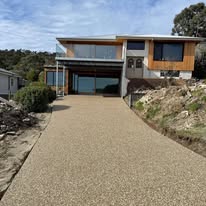
Concrete Services in HMAS Cerberus
Frequently Asked Questions
How long does exposed aggregate concrete last?
When installed correctly and properly maintained, exposed aggregate concrete can last for many years. Its durability makes it suitable for high-traffic areas such as driveways and outdoor spaces.
What maintenance does exposed aggregate require?
Exposed aggregate maintenance focuses on cleaning and periodic resealing. Regular cleaning involves hosing off accumulated debris, occasional washing with mild detergent for stubborn dirt, and prompt attention to oil or chemical spills that might stain if left untreated.
Resealing is recommended every two to three years for residential installations, with more frequent attention for commercial areas or surfaces with high UV exposure. The sealer protects against water penetration, resists staining, and enhances aggregate colour appearance. Quality penetrating or surface sealers with UV stabilisers extend this protection between applications.
Avoid high-pressure washing at extreme settings, which can dislodge aggregate or damage sealer coatings. Standard pressure settings with appropriate nozzle distance are sufficient for effective cleaning without surface damage.
Is exposed aggregate suitable for driveways?
Yes, exposed aggregate is widely used for driveways due to its strength and ability to handle vehicle traffic. Its textured surface also provides additional grip compared to plain concrete.
What is exposed aggregate concrete?
Exposed aggregate concrete is a decorative finish where the top layer of cement is removed to reveal the natural stones within the mix. This creates a textured, durable surface commonly used for driveways, pathways, and outdoor areas.

Exposed Aggregate Applications Across Melbourne
Benefits for Melbourne’s Climate and Lifestyle
Exposed aggregate performs well in Melbourne’s variable climate, offering resistance to UV exposure, reliable traction in wet conditions, and durability through changing temperatures. When properly installed and sealed, it protects against moisture while maintaining its appearance over time. Its low-maintenance nature and range of custom finishes also make it a practical and versatile choice for modern Melbourne lifestyles.
Outdoor Entertaining Areas and Patios
Melbourne’s lifestyle emphasises outdoor entertaining, making patios and outdoor living areas significant investments in residential properties. Exposed aggregate provides surfaces that handle furniture placement, foot traffic, and the occasional dropped item while maintaining an attractive appearance that complements landscaping and architectural elements.
The natural stone appearance of exposed aggregate integrates well with garden settings, creating visual connections between built and planted areas. Texture options allow selection of finishes that balance appearance with barefoot comfort—medium exposure river pebble blends typically suit these applications well.
Pathways and Entry Areas for Enhanced Curb Appeal
Pathways create the transition between street and home, establishing visual impressions before visitors reach the front door. Exposed aggregate allows this transition to enhance rather than detract from property presentation, with aggregate selection coordinating with house materials and garden design.
Entry areas benefit from the combination of visual appeal and practical durability—handling foot traffic, delivery activity, and weather exposure while maintaining the appearance that contributes to overall property value.
Pool Surrounds for Safety and Aesthetics
Exposed aggregate is well suited to pool surrounds, offering natural slip resistance, durability, and a finish that complements outdoor areas. With the right aggregate selection, it provides a comfortable surface underfoot while helping to manage heat in sun-exposed areas. Its seamless finish also reduces joints where water can pool, making it both a practical and visually appealing choice.
Get Your Free Exposed Aggregate Quote Today
Nupave provides professional exposed aggregate installations across Melbourne and surrounding regions, including metropolitan Melbourne, the Mornington Peninsula, Bass Coast, and West and South Gippsland.
Every project begins with a free onsite consultation, where we assess your site conditions, discuss design options, and help you select the right aggregate to suit your property. You’ll receive clear, detailed pricing along with expert advice to ensure you’re making the right decision from the start.
Our commitment is to deliver high-quality workmanship using premium local materials, installed to Australian Standards for long-term performance.
Contact us today to arrange your consultation.
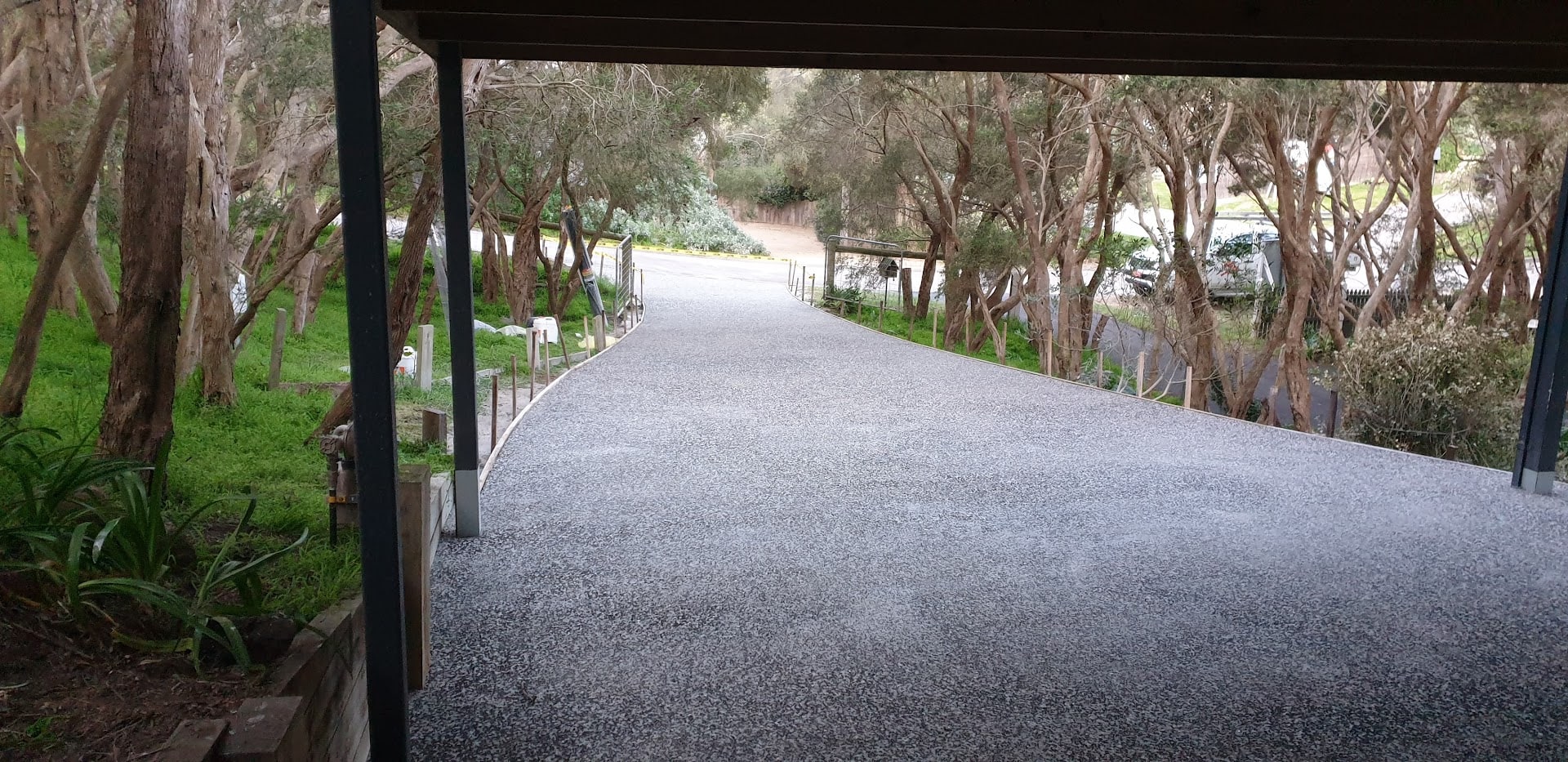
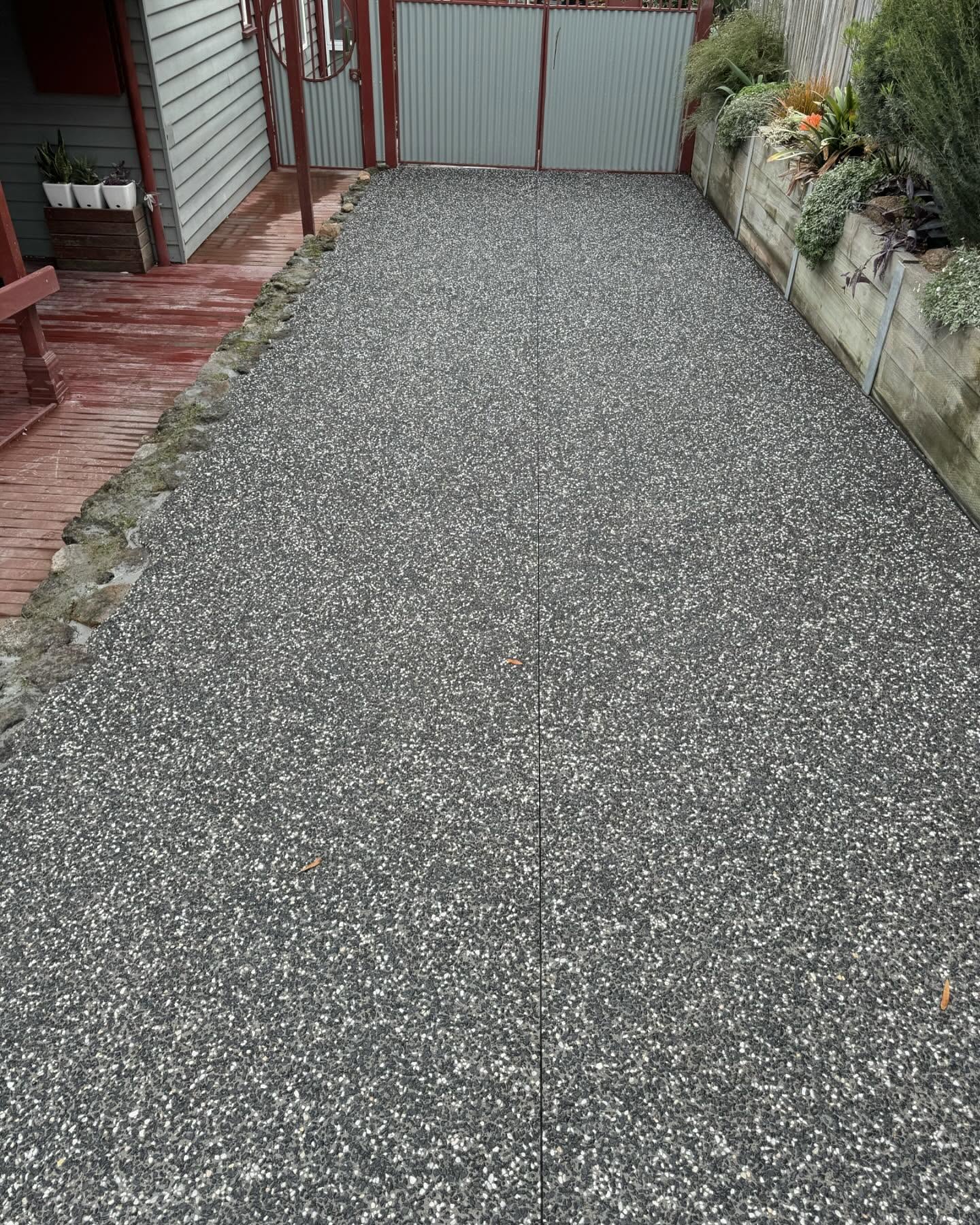
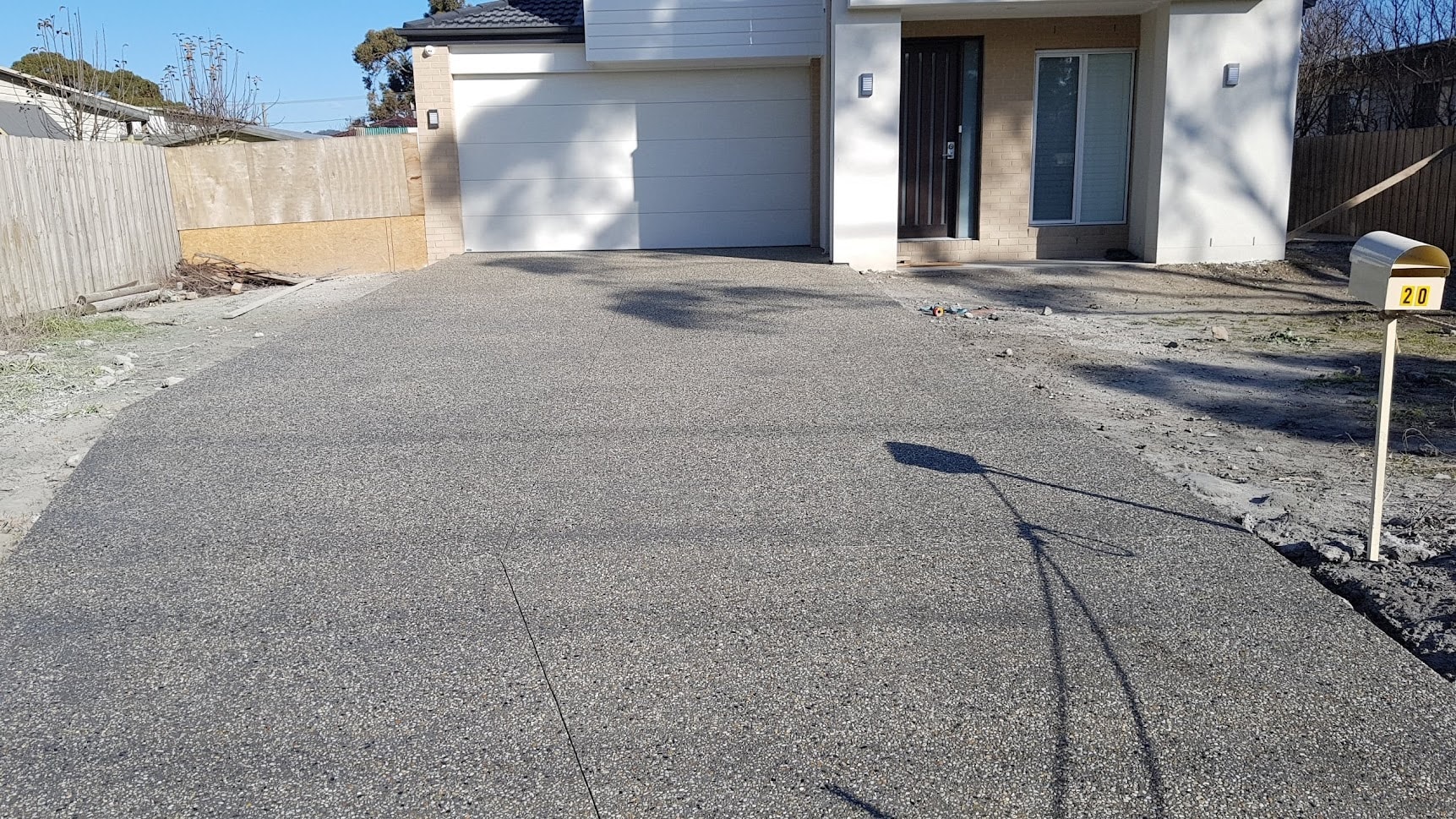
Around HMAS Cerberus, exposed aggregate suits the wide-format driveways common to the area. Rather than replacing a solid slab, spray-on concrete resurfacing in HMAS Cerberus can deliver a similar decorative effect at a fraction of the cost. In neighbouring areas including Crib Point, exposed finishes remain a popular choice for driveways and entertaining areas alike. We handle exposed aggregate concrete Melbourne installs throughout the Mornington Peninsula Shire.