
Professional Concrete Maintenance Services Melbourne
Commercial Concrete Solutions for Melbourne Businesses
Most commercial concrete doesn’t need replacing—it needs proper maintenance. That’s the approach we take at Nupave. After 30+ years working across Melbourne’s warehouses, factories, car parks, and commercial buildings, we’ve seen too many property managers pay for full concrete replacement when targeted repairs and resurfacing would have delivered another 10-20+ years of service life.
Our focus is on concrete repairs, resurfacing, and protective coatings that extend the life of your existing slabs. We handle everything from crack repairs through to slip-resistant commercial concrete resurfacing and epoxy flooring—all completed by our in-house professional team, not subcontractors.
Whether you’re managing a single facility or a portfolio of commercial properties across Melbourne, we provide guidance on what actually needs doing versus what can wait.
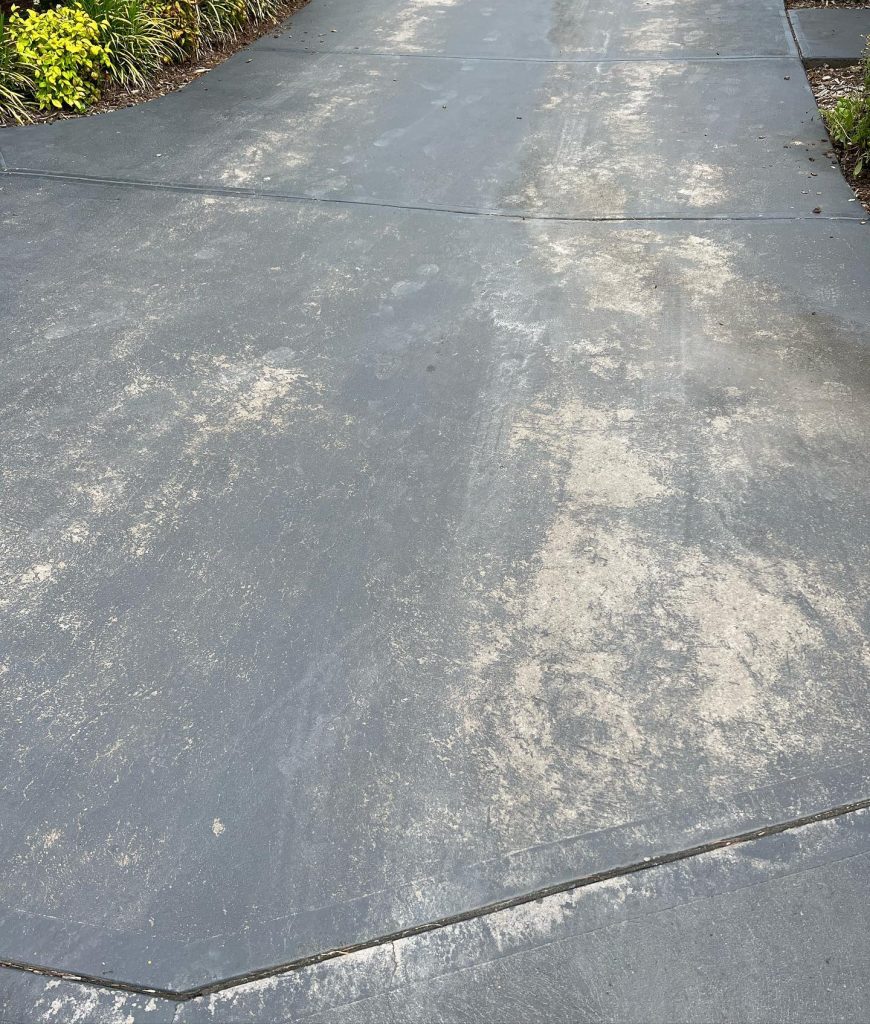
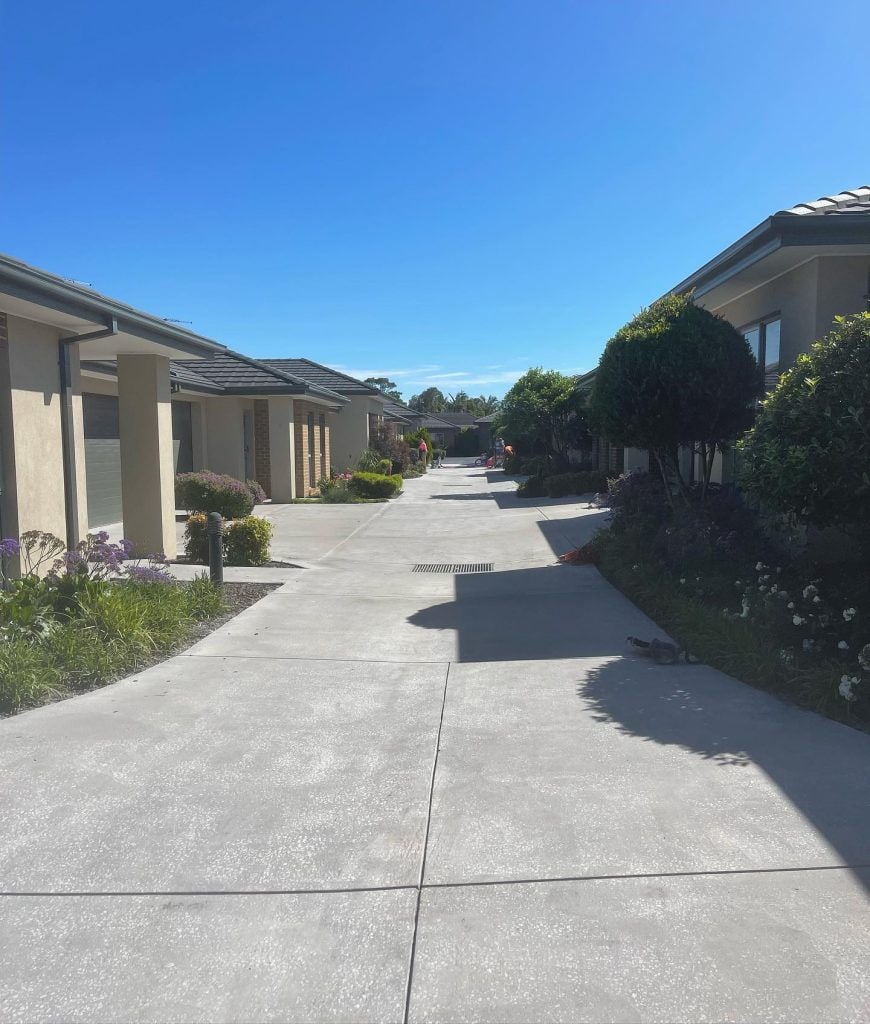
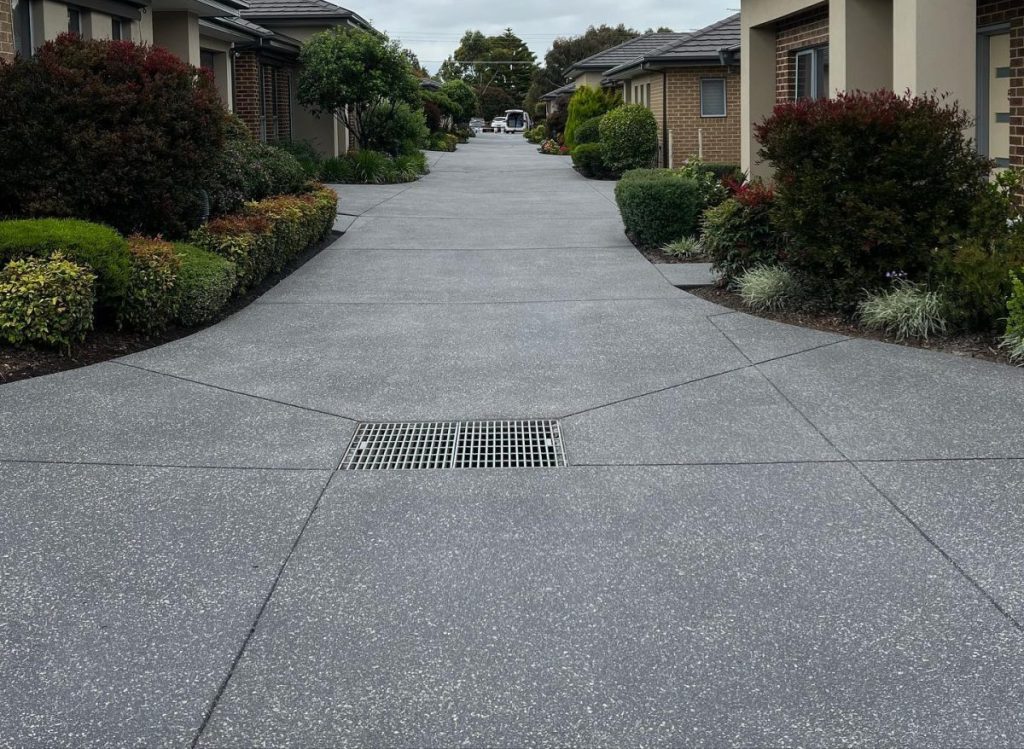
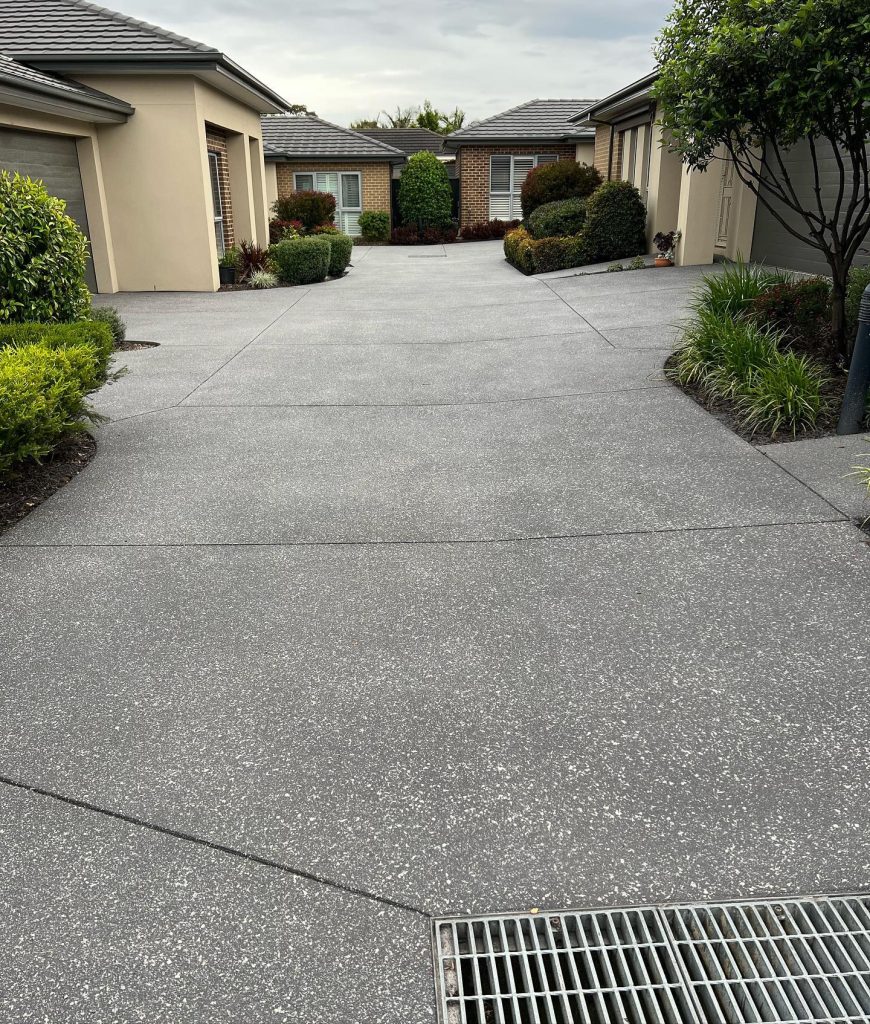
Who We Work With
Facility managers dealing with warehouse and factory floors that cop daily punishment from forklifts, pallet jacks, and heavy loads. You need surfaces that can withstand heavy loads without constant patching, and you need work scheduled around operations—not the other way around.
Property and asset managers responsible for multiple commercial sites. Car parks showing oil stains and surface wear, retail entrances that need to look presentable while meeting safety compliance, loading docks with cracked concrete that’s getting worse. You’re weighing repair costs against replacement budgets across your portfolio.
Strata and body corporate managers handling aging car parks where owners want results without special levies. Staged repair programs that spread costs over several years often make more sense than one large project.
Aged care operators who need surfaces that are non-slip but not so rough they’re difficult to clean or uncomfortable underfoot. Falls are a serious liability issue, and surface safety standards aren’t optional.
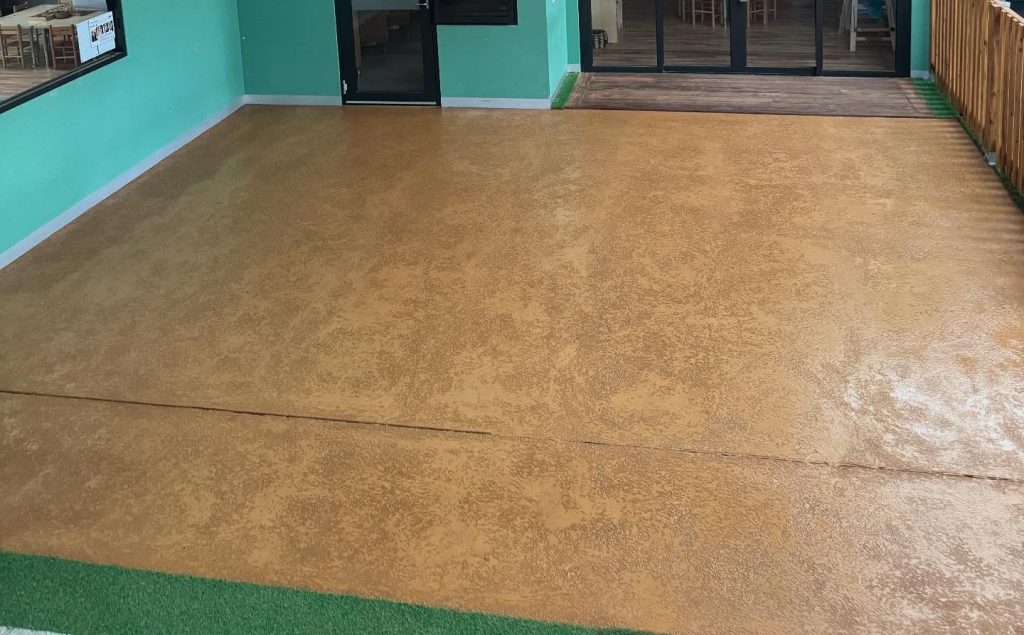
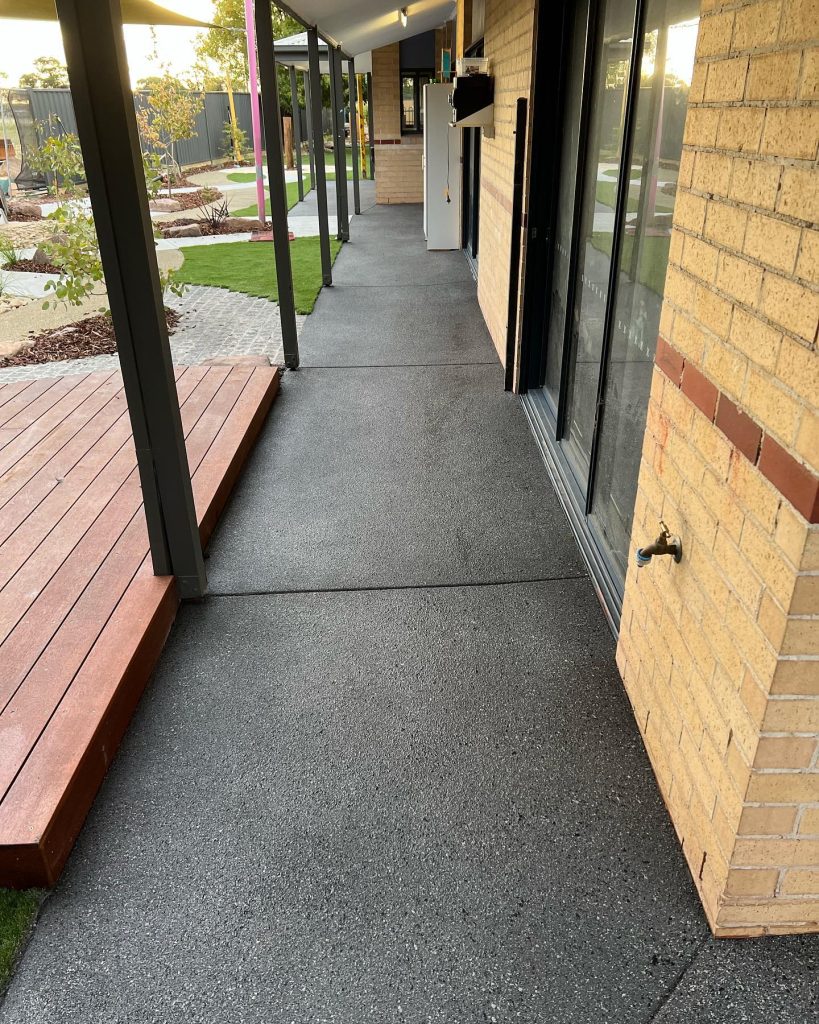
Childcare centre managers requiring durable, easy-clean outdoor surfaces that stay safe after rain. The surface needs to meet slip ratings without being abrasive on bare feet or creating cleaning headaches.
Commercial builders and maintenance contractors looking for reliable commercial concrete contractors who understand compliance requirements, can provide documentation, and won’t disappear after the job.

Common Problems in Commercial Concrete
Concrete issues tend to escalate. What starts as a small crack becomes a structural problem. Early identification saves money.
Cracking and Structural Movement
Settlement beneath slabs, inadequate control joints, and loads beyond original design specs all cause cracking. Hairline surface cracks are cosmetic. Structural cracks wider than 2-3mm that go through the slab need attention before they allow water penetration and steel corrosion. Tree roots, water table shifts, and poor original compaction are common culprits across Melbourne commercial properties.
Surface Wear and Spalling
Heavy traffic from forklifts and vehicles wears down concrete surfaces. Spalling—where the top layer chips and flakes off—happens when reinforcement cover fails or when water and salts penetrate the surface. Factory floors and loading docks see this constantly. Oil spills in car parks accelerate the process.
Slippery Surfaces and Safety Risks
Smooth sealed concrete becomes hazardous when wet. Slip resistance degrades over time through normal wear and polishing. Under Victoria’s OHS requirements, you’re responsible for maintaining safe surfaces. Commercial kitchens, ramps, aged care bathrooms, and wet areas all have specific slip rating requirements under AS 4586:2013.
Failing Coatings or Previous Repairs
Previous patch jobs without proper bonding often fail. Coatings delaminate when applied over inadequately prepared surfaces or when moisture is trapped in the slab. If someone cut corners on preparation, you’ll see the results within a few years—peeling, bubbling, or complete coating breakdown.

Our Commercial Concrete Services
Concrete Repairs & Crack Injection
Structural crack repair involves more than filling gaps. For cracks that go through slabs or appear in foundations, we use epoxy injection or polyurethane injection to fill voids, bond crack faces, and restore load transfer. Where movement is expected, we may recommend control joint installation, saw-cutting, or reinforcement with dowels.
For settlement issues, slab lifting or underpinning may be required before surface work makes sense. We assess the cause before recommending the fix.
Surface Grinding & Preparation
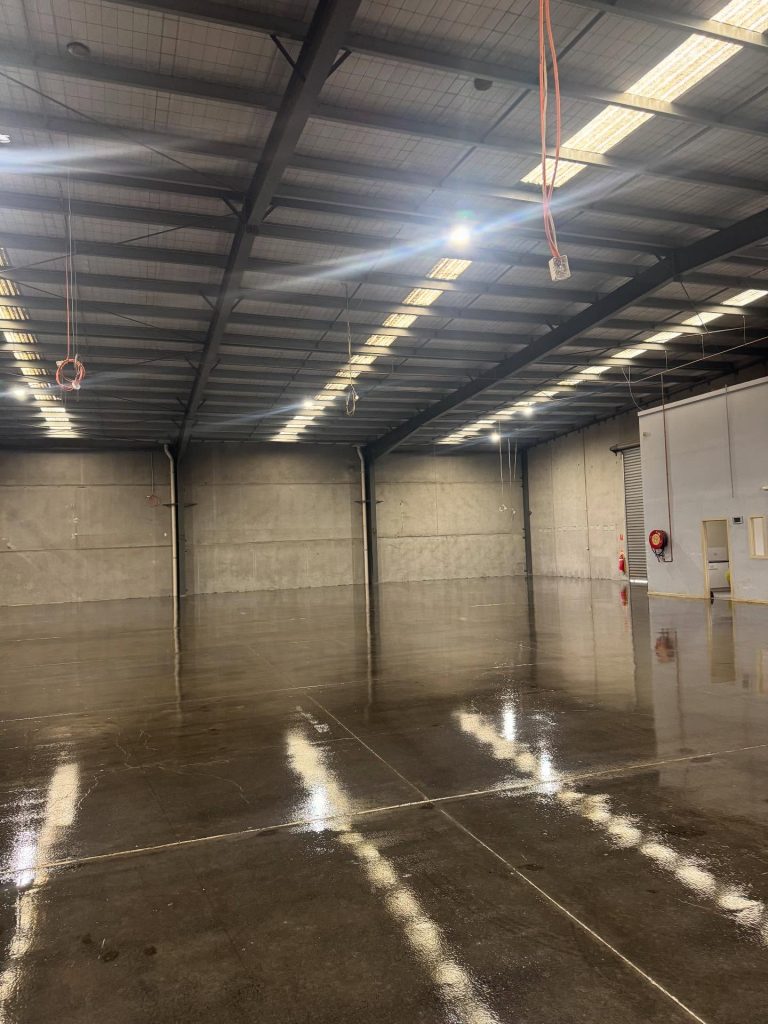
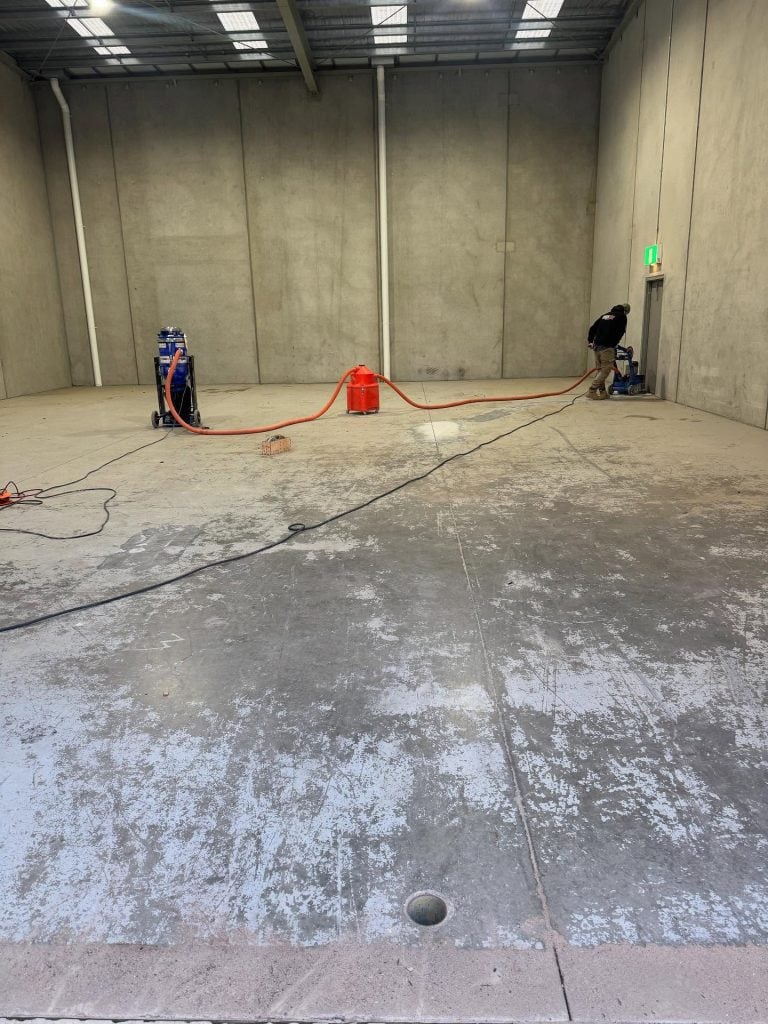
Proper preparation determines whether coatings and overlays last or fail. We use diamond grinding to expose aggregate, remove laitance, smooth out slope transitions, and strip failed previous coatings. This achieves the surface profile needed for adhesives and coatings to bond properly.
Before any coating work, we test for moisture content. High slab moisture causes coating failure—it’s one of the most common reasons previous concrete repairs break down.
Concrete Resurfacing Solutions
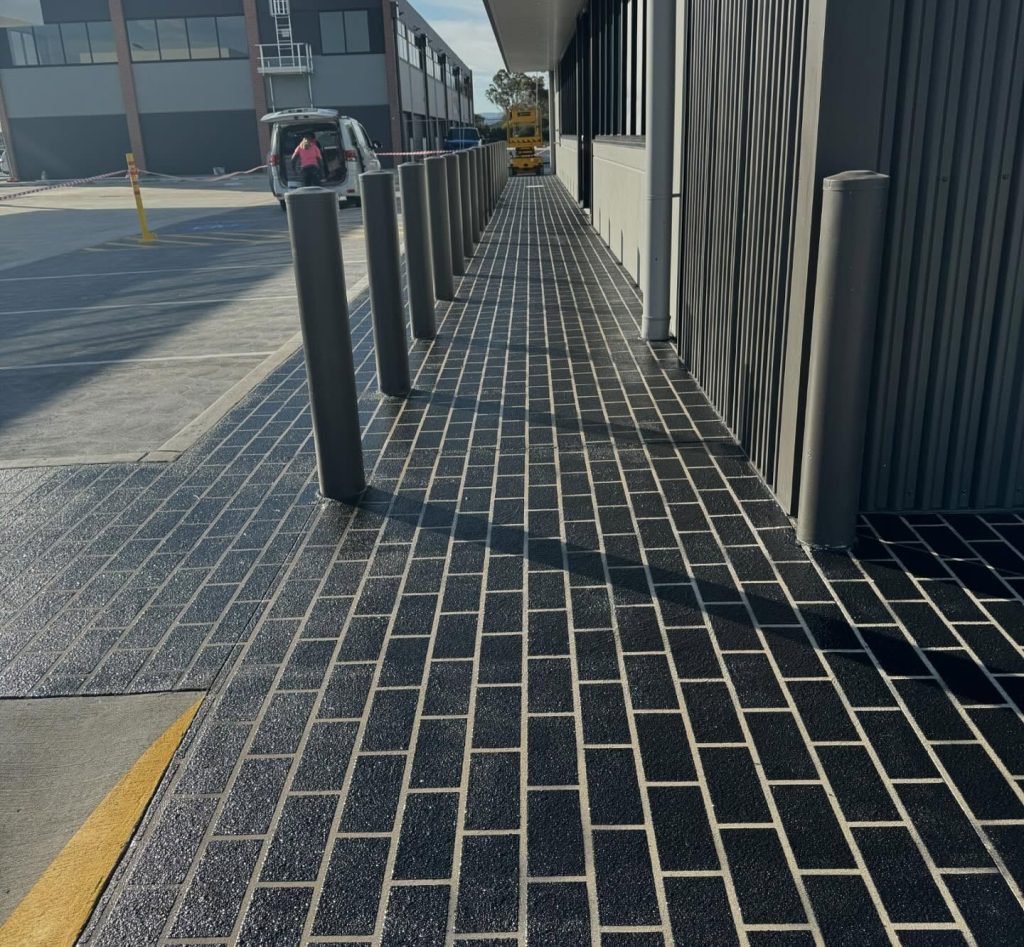
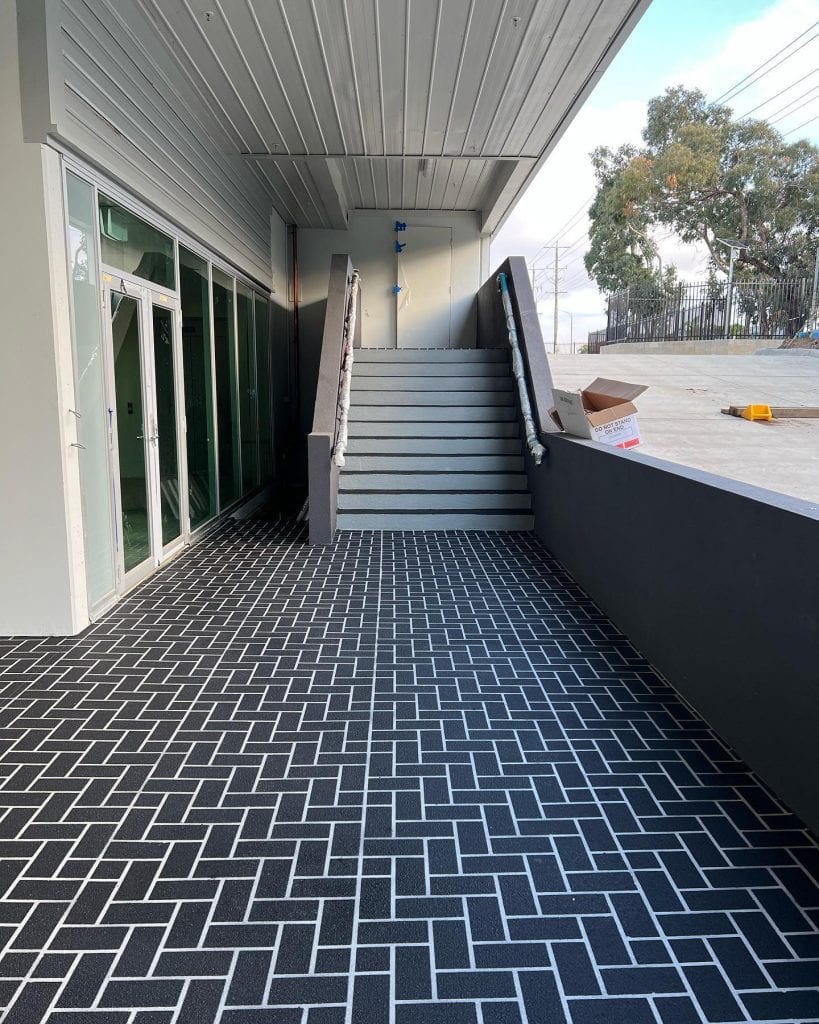
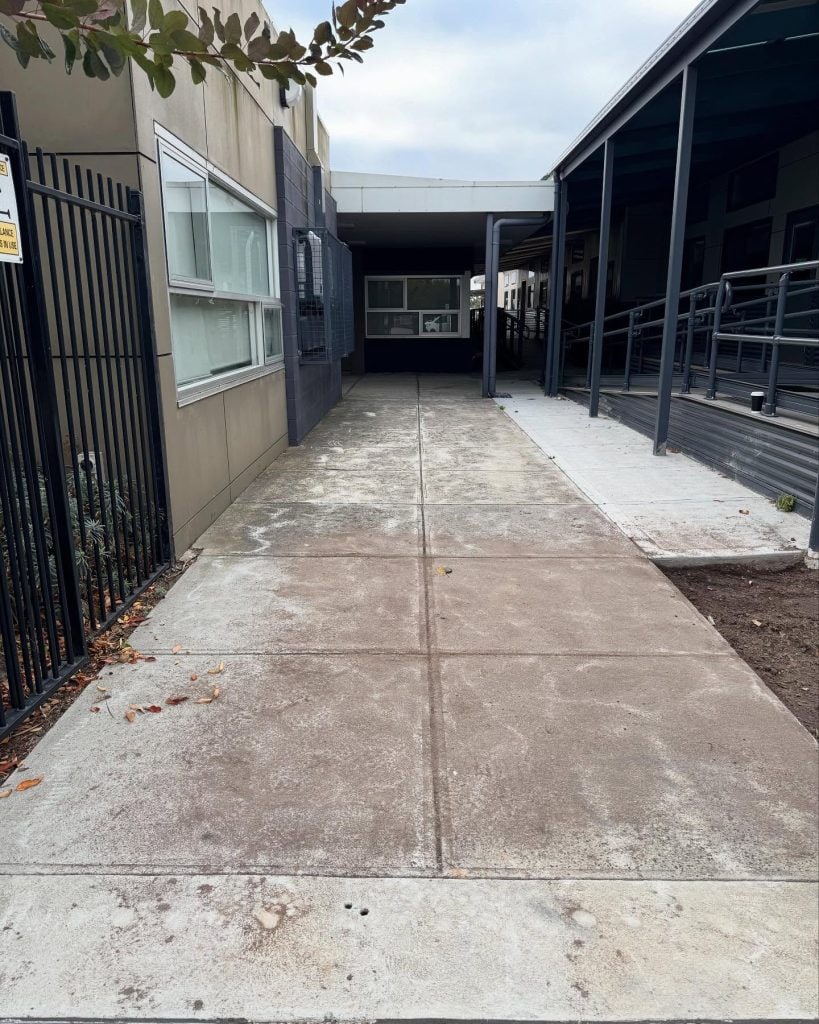
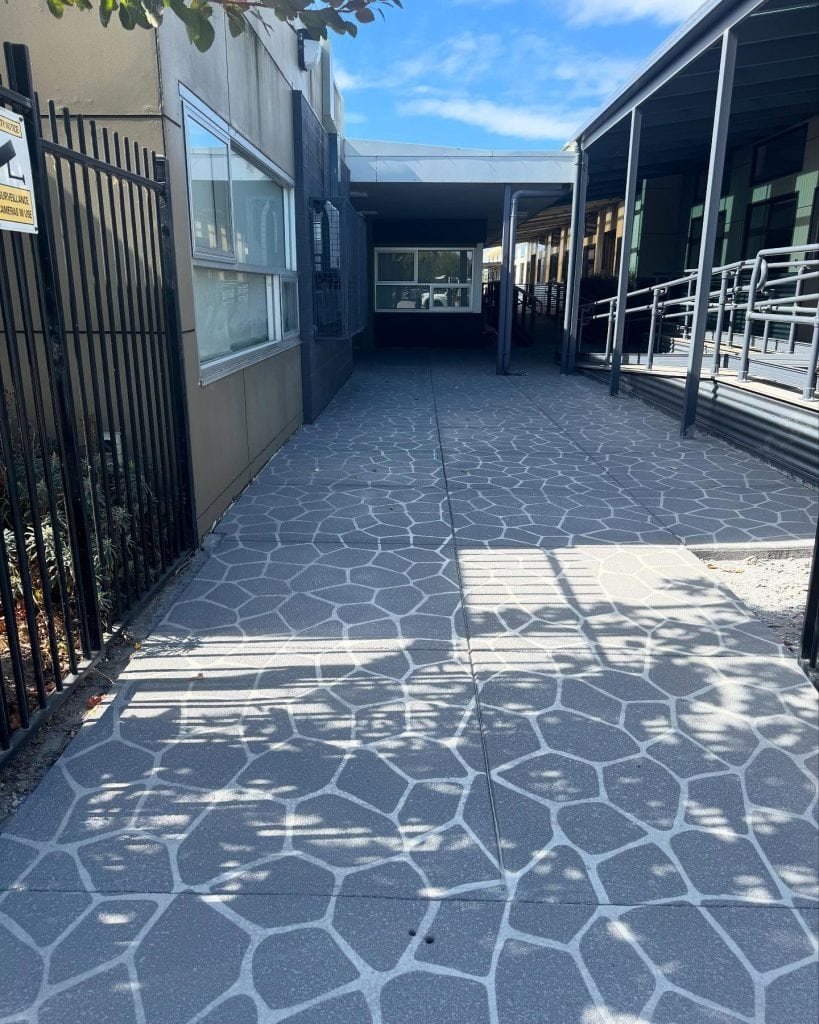
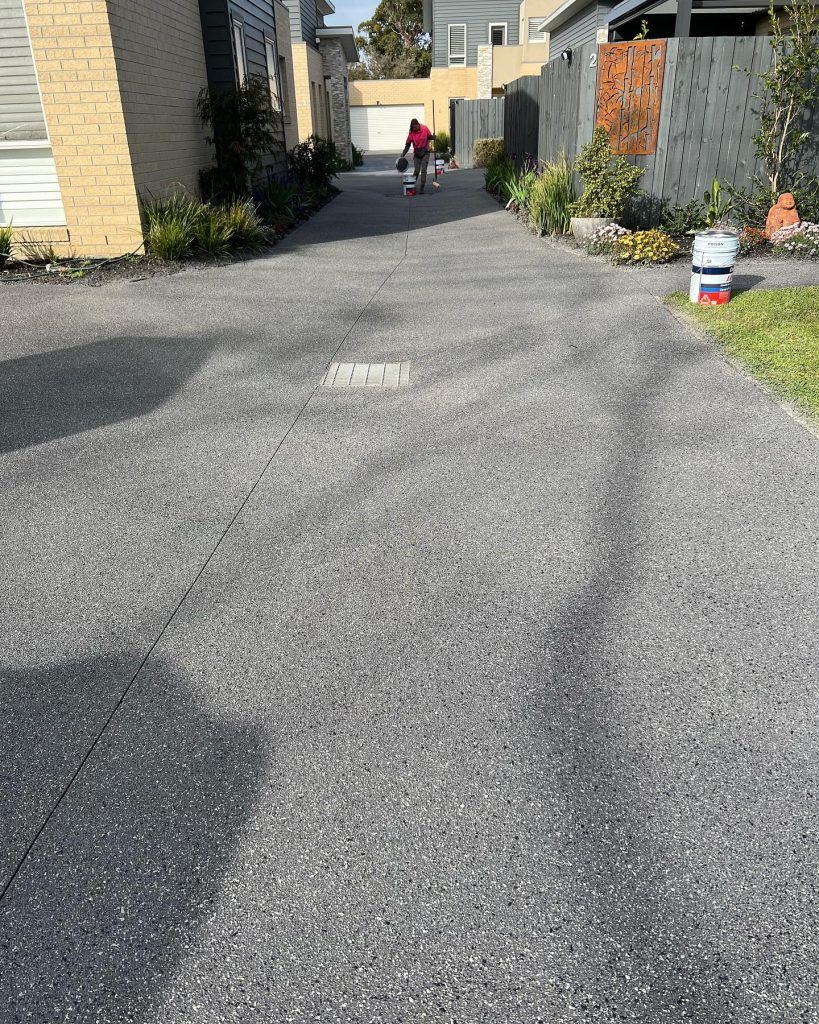
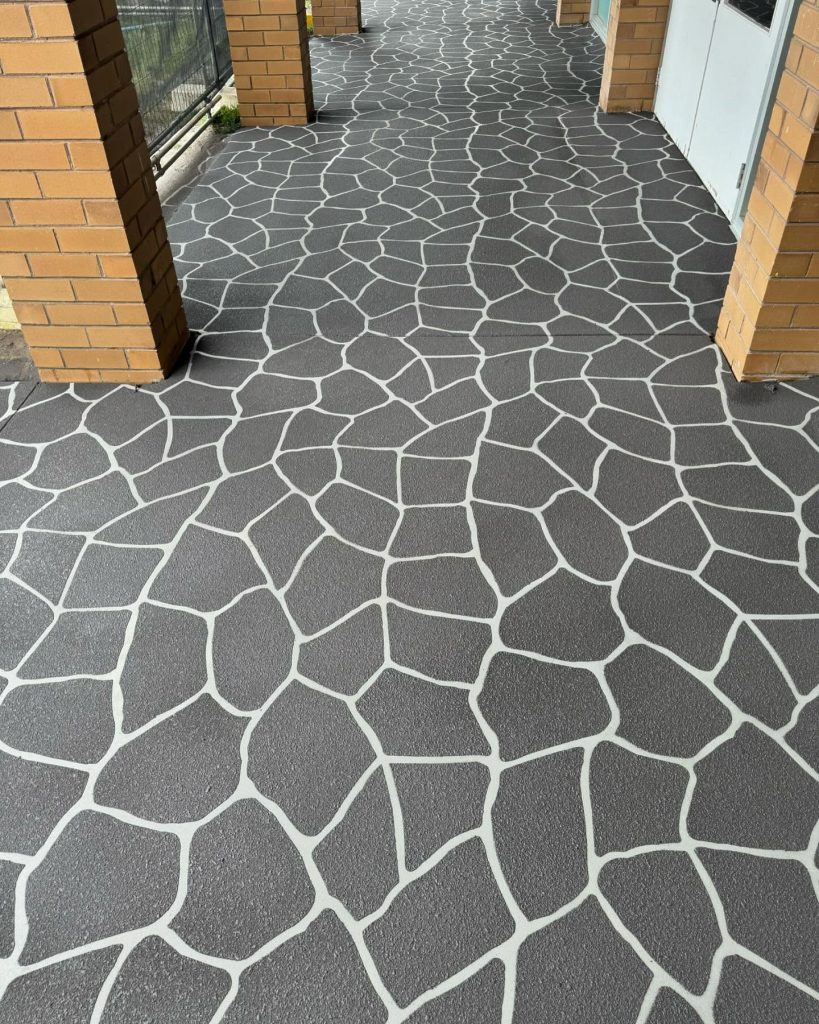
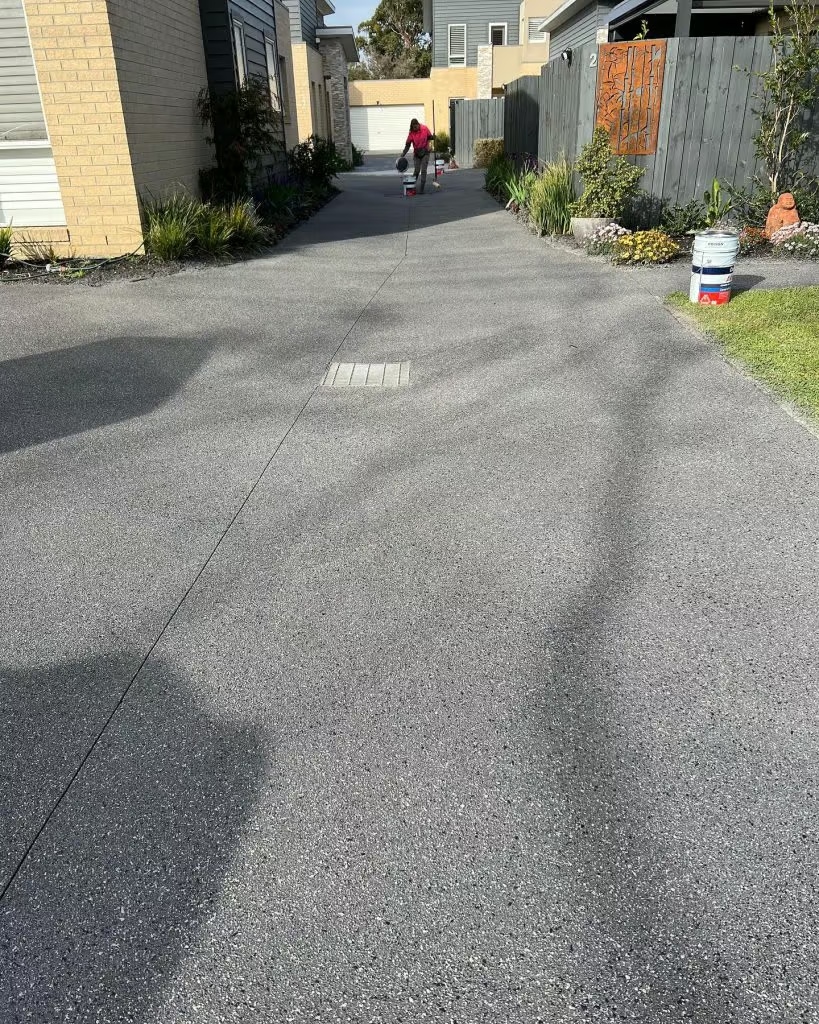
When the underlying concrete is structurally sound but the surface is worn, damaged, or outdated, resurfacing extends the slab’s service life significantly. We offer spray-on overlays, trowel-applied finishes, and polymer-modified systems in a vast range of finishes—from practical industrial textures to decorative exposed aggregate and coloured concrete options.
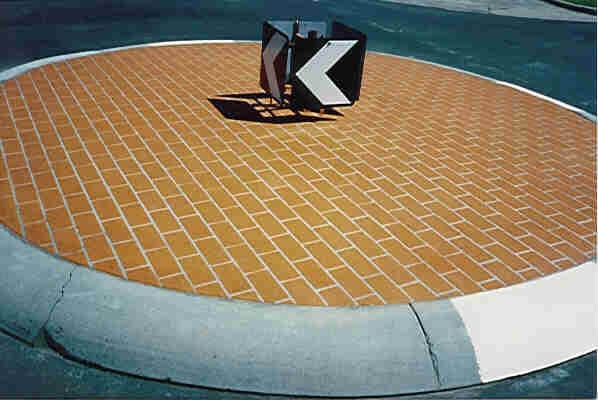
Concrete Resurfacing corrects minor damage, unifies colour across repaired areas, and can improve slip resistance. For commercial spaces where presentation matters, decorative finishes like stencilled patterns or slate impressions are available.
Epoxy Flooring for Commercial & Industrial Spaces
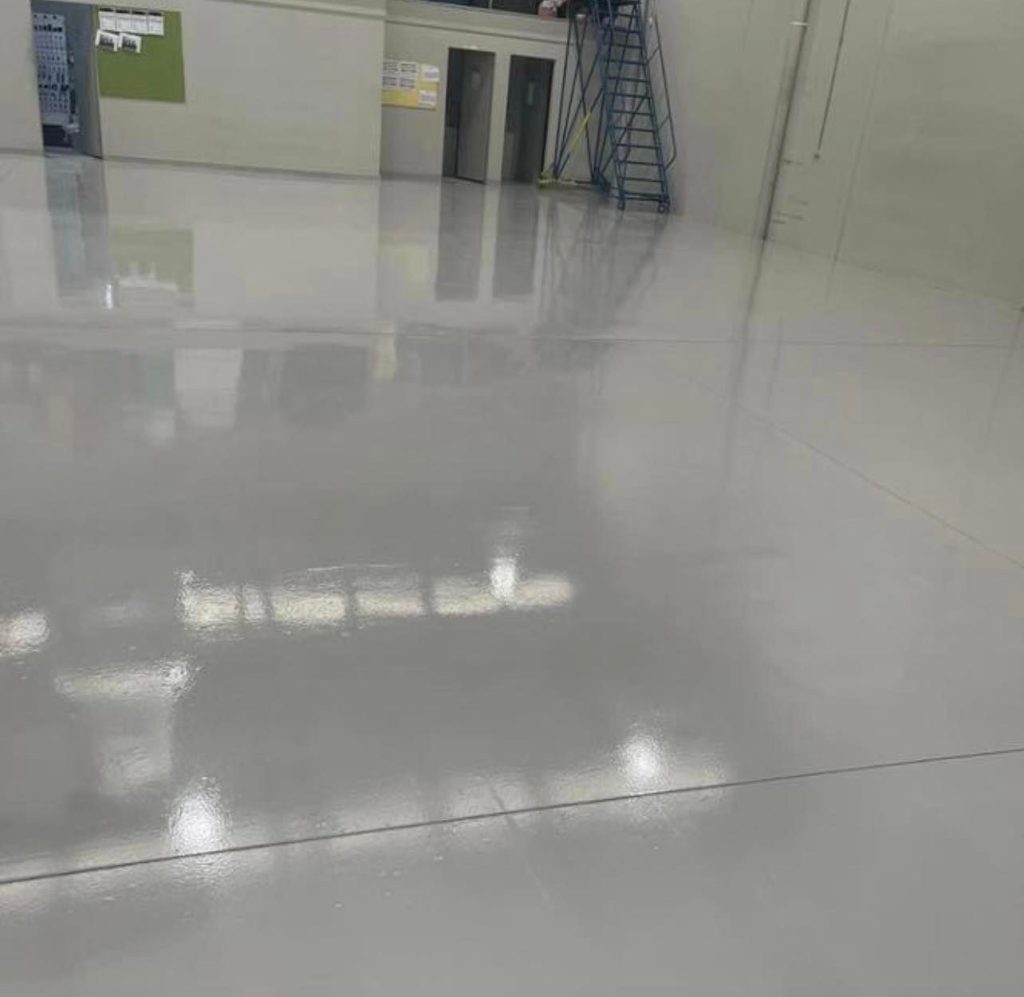
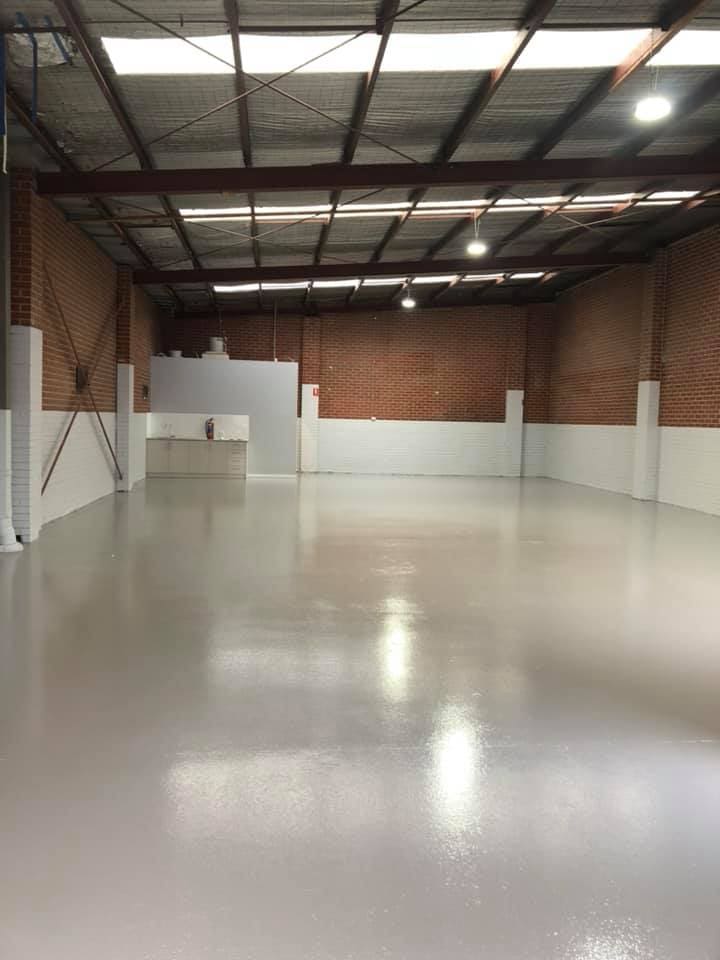
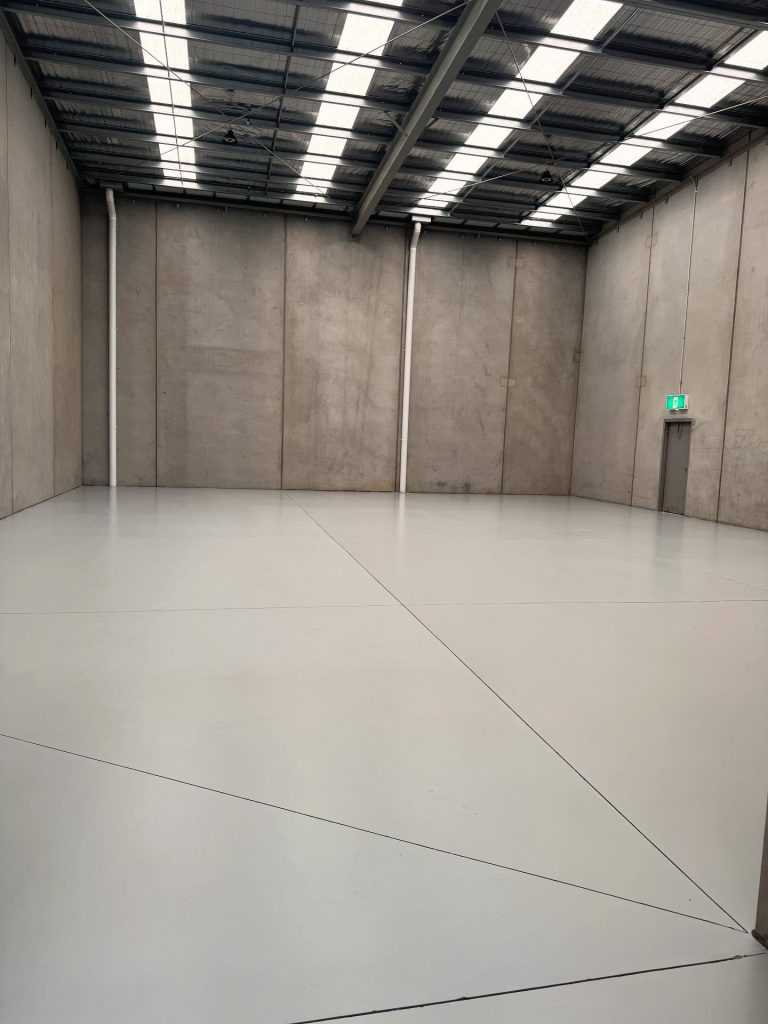
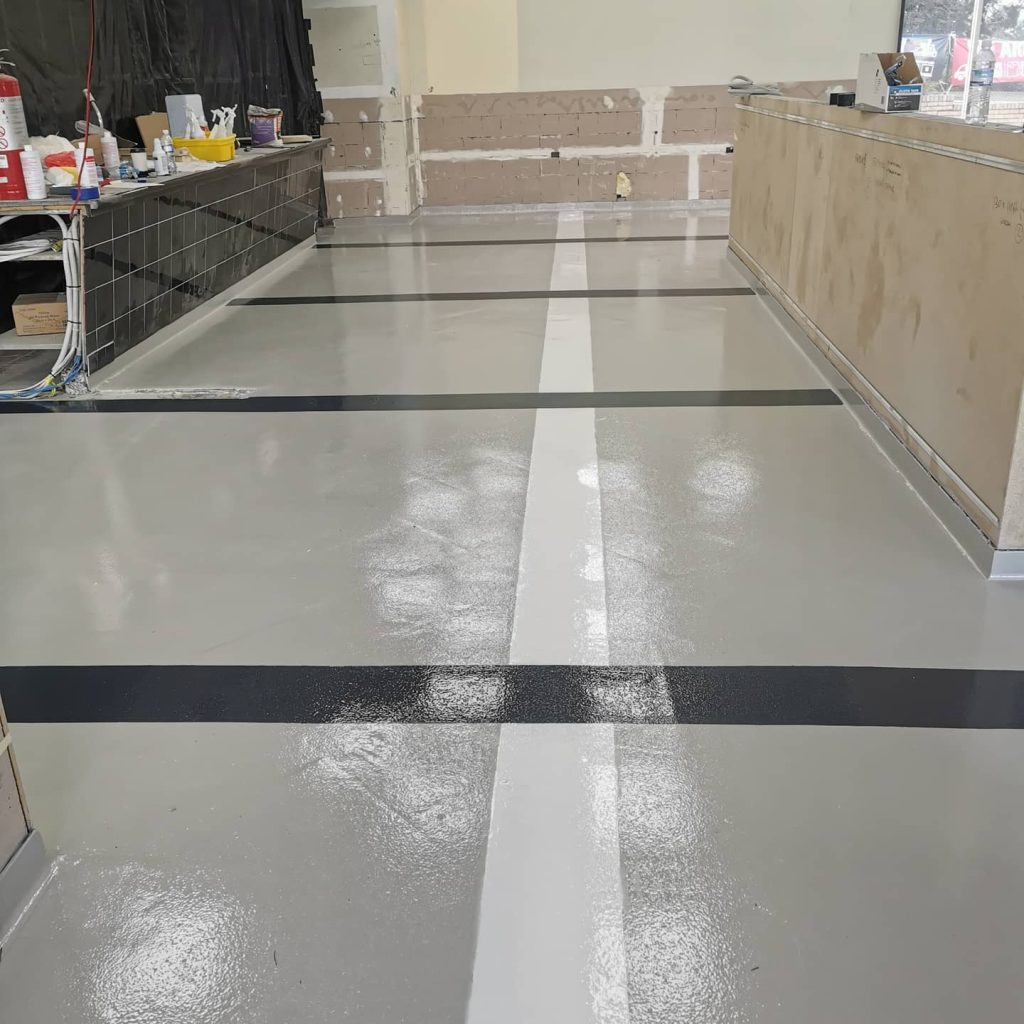
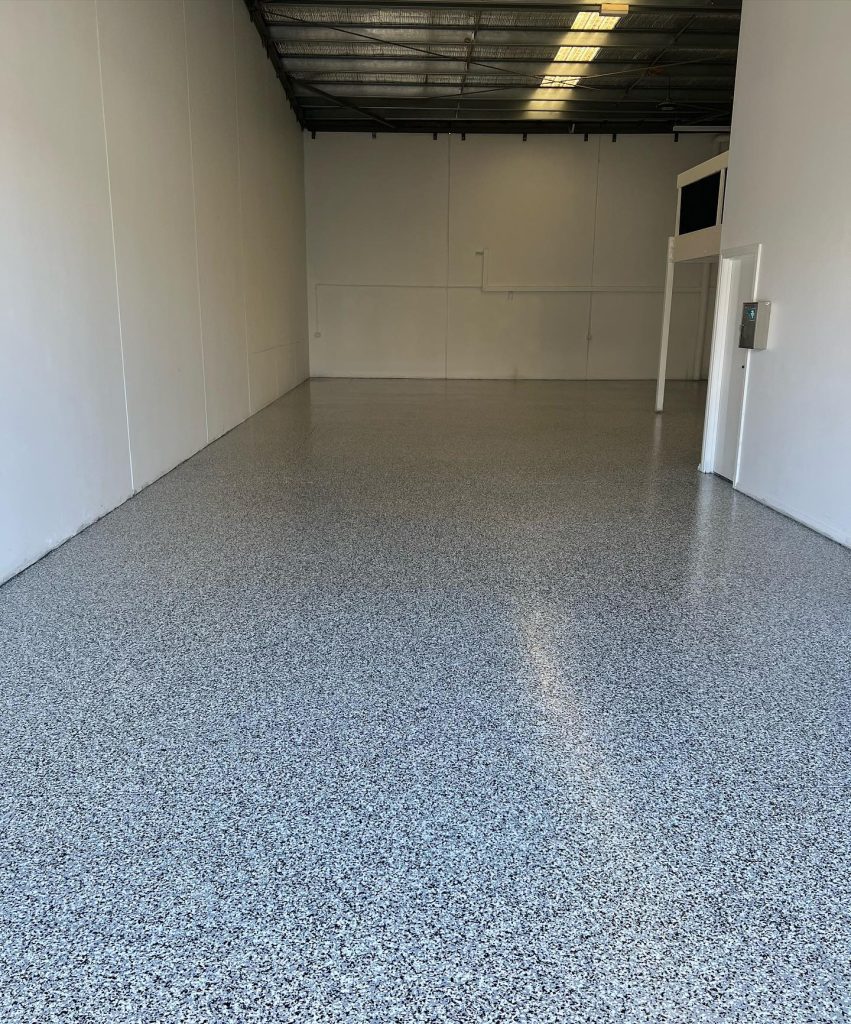
Epoxy flooring systems provide chemical resistance, abrasion resistance, and easy cleaning for industrial and commercial environments. We install multi-layer epoxy systems including primer, base coat, aggregate broadcast for slip resistance, and protective top coat.
For chemical exposure zones—food processing, waste areas, factories handling acids or oils—we use novolac epoxy systems with chemical resistant properties. These require precise substrate preparation and controlled curing conditions, which is why we keep this work in-house rather than subcontracting.
Epoxy surfaces are seamless, which makes them suitable for hygiene-sensitive areas like commercial kitchens and healthcare facilities. Typical cure times require planning—surfaces are walkable in 24-48 hours but need 5-7 days before vehicle traffic.
Slip-Resistant Finishes & Safety Improvements
Meeting Australian Standards AS 4586:2013 and AS 4663:2013 for slip resistance isn’t optional in commercial settings. We apply anti-slip additives including quartz, alumina, and glass beads to coatings, and provide textured finishes through exposed aggregate or broom finishing.
Different environments require different slip ratings:
General commercial interior/exterior: R10-R11 (or P3)
High moisture areas, kitchens, ramps: R12-R13 (or P4-P5)
Wet barefoot areas: specific barefoot classifications
We can provide guidance on the appropriate rating for your space and supply test reports for compliance documentation.
Maintenance vs Replacement – Making the Right Call
Replacement isn’t always necessary—and it’s not always avoidable. Here’s how we assess it.
Resurfacing makes sense when:
The substrate concrete is structurally sound
No major settlement or ongoing ground movement
Cracks are surface-level or can be injected and stabilised
Reinforcement cover is intact (no widespread spalling exposing steel)
Existing slab thickness and compressive strength are adequate
When these conditions are met, proper repair and resurfacing can extend concrete life by 10-20+ years.
Replacement becomes necessary when:
Ongoing ground movement or slab instability exists
Widespread spalling with reinforcement exposure
Original drainage or slope is wrong (overlays won’t fix fall direction)
Substrate is too thin or weak to support traffic loads
Previous coating failures have left the substrate compromised beyond repair
Cost comparison: Resurfacing typically costs $45-$150/m² depending on finish and preparation required. Full concrete replacement runs $90-$200/m² plus removal costs of $45-$60/m² for unreinforced slabs. When repair and preparation costs approach 70-80% of replacement cost, replacement usually makes more sense.
We’ll give you an honest assessment. Sometimes resurfacing is throwing money at a slab that needs replacing. We’ll tell you that upfront.
Ongoing Concrete Maintenance for Commercial Properties
We’re structured as a long-term maintenance partner, not a one-off contractor. Commercial concrete needs ongoing attention—and planned maintenance costs less than emergency repairs.
Scheduled inspections identify problems early. Cracking that could be injected this year becomes structural failure requiring replacement in three years.
Staged repair programs spread costs across financial years. For strata properties and portfolio managers, this approach fits budget cycles better than single large projects.
Preventative treatments—sealers, protective coatings, joint maintenance—extend service life and reduce repair frequency.
Documentation and reporting supports asset management requirements. We provide detailed reports on condition, work completed, and recommended future maintenance that integrates with your property management systems.
Why Melbourne Businesses Choose Nupave
30+ years working across Melbourne’s commercial and industrial sector. We’ve seen every type of concrete failure and know which solutions last.
Honest assessments. We don’t push replacement when repair works, and we don’t resurface slabs that need replacing. Our assessments focus on what’s practical and cost-effective for your situation.
All resurfacing and epoxy work completed in-house. No subcontractors for critical work. Our professional team handles every commercial concreting project from assessment through completion.
Understanding of real commercial constraints. We schedule around your operations, stage work to minimise disruption, and understand that safety and compliance aren’t negotiable.
Focus on durability over appearance. Decorative finishes are available, but our priority is surfaces that perform under real conditions—factory floors that handle forklift traffic, car parks that resist oil damage, aged care surfaces that stay safe.
Preventative Maintenance vs Reactive Repairs
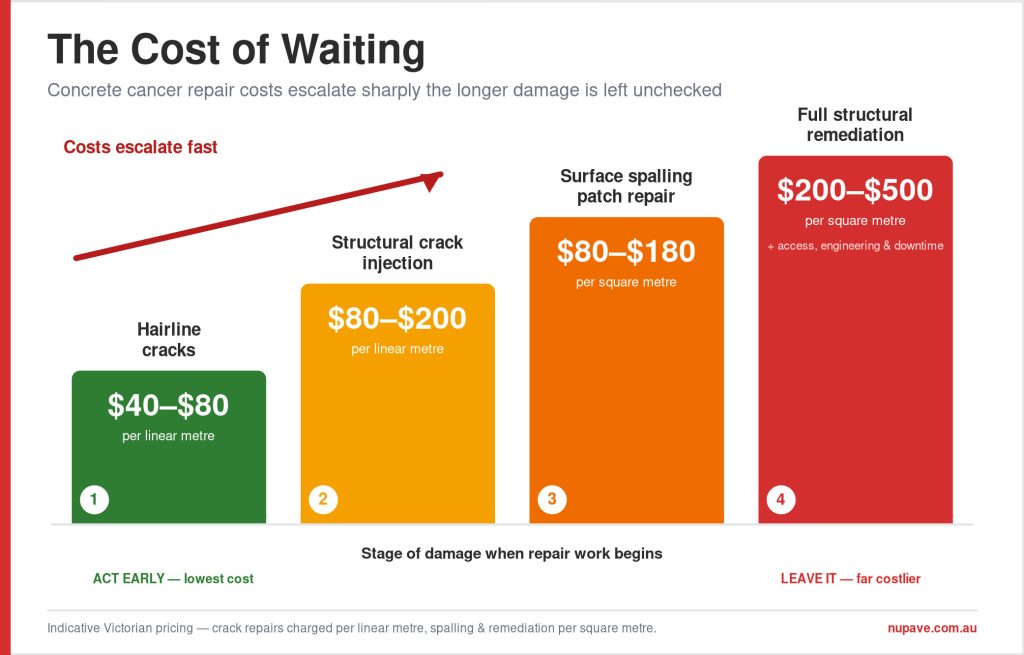
The difference between a $40–$80 per linear metre crack injection and a $200–$500 per square metre full concrete cancer remediation comes down to timing. Waiting for visible spalling, rust stains, or chunks of concrete falling away means the damage has already progressed well beyond the reinforcement.
How Early Detection Saves Thousands
Concrete cancer occurs when internal steel reinforcement bars rust, expand up to ten times their original volume, and force the surrounding concrete to crack and break away. Moisture, salt, or carbonation penetrate the concrete cover and compromise the high-pH environment that normally protects embedded steel. Once corrosion begins, the expansion creates internal pressure that cracks the concrete-allowing more moisture in and accelerating the cycle.
Hairline crack repairs cost approximately $40–$80 per linear metre in Victoria. Structural crack injection runs $80–$200 per linear metre. Surface spalling patches average $80–$180 per square metre. But once corrosion has progressed to exposed reinforcement and significant section loss, full remediation costs $200–$500 per square metre-plus access costs, engineering certification, and extended project timelines.
Business Disruption Minimised Through Planning
Emergency concrete repairs force immediate closures, rush procurement of materials, and premium rates for urgent work. Planned maintenance programs allow scheduling during off-hours, weekends, or low-occupancy periods. For retail centres, this means repairs during trading lulls rather than peak seasons. For warehouses, it means coordinating around delivery schedules rather than shutting down bays unexpectedly.
Regular maintenance also eliminates the discovery risks that plague reactive projects. When concrete is broken out during emergency work, corrosion is often more widespread than visual indicators suggested-leading to cost blowouts and extended timelines.
Extended Asset Life Through Proactive Monitoring
A repaired concrete element with proper protective coatings and membrane systems can avoid repeat repairs for 10–20 years when environmental exposures are managed. Scheduled monitoring with crack gauges, photographic documentation, and periodic professional inspections catches movement or progression early. This approach costs a fraction of replacement and preserves your capital for other priorities.
Comprehensive Commercial Concrete Services
Concrete Cancer Diagnosis & Treatment
Effective concrete repair starts with accurate diagnosis. Visual inspection identifies obvious signs-rust stains appear as reddish-brown discoloration leaching from concrete surfaces, bubbling render occurs when surface coatings blister or lift, and flaking or chunks of concrete falling away indicate active spalling.
Beyond visual assessment, we use non-destructive testing including cover meters to measure concrete depth over reinforcement, moisture mapping to identify water ingress pathways, and half-cell potential testing to locate active corrosion. Core sampling measures carbonation depth and chloride content-critical data for determining repair scope and specifying appropriate materials.
For aged care facilities, schools, and commercial properties, we provide detailed structural assessments with photographic documentation and prioritised repair recommendations. This allows facilities managers and body corporate committees to plan budgets and stage work appropriately.
Treatment involves removing damaged concrete to at least 20–50mm beyond visible damage, cleaning corroded steel by wire brushing or grit blasting, applying corrosion inhibitor coatings to reinforcement, and reinstating with polymer-modified repair mortars that match the original concrete’s strength and thermal properties.
Ongoing Maintenance Programs for Strata & Facilities
Strata properties and body corporate buildings benefit from scheduled inspection programs that spread costs across multiple financial years rather than requiring large lump-sum payments. We establish baseline condition surveys with measurable diagnostics, then monitor progression through regular inspections.
Maintenance contracts for car parks, walkways, common areas, and balconies include:
Annual or biannual professional inspections with photographic records
Crack width measurement and progression monitoring
Priority-based repair scheduling aligned with committee budgets
Compliance documentation for insurance and safety requirements
Pressure Cleaning & Surface Preservation
High-pressure cleaning removes salt deposits, dirt, biological growth, and surface contaminants that contribute to concrete deterioration. Cleaning also reveals the true condition of concrete surfaces-hidden cracks, early spalling, and moisture patterns become visible once contamination is removed.
For commercial properties, we recommend cleaning schedules based on exposure conditions. Coastal properties and areas with heavy salt exposure require more frequent cleaning than sheltered inland sites. Regular cleaning prepares surfaces for protective coating applications and extends the intervals between resealing.
Epoxy & Protective Coating Maintenance
Epoxy flooring and protective coatings degrade over time from UV exposure, traffic wear, and chemical attack. Scheduled resealing maintains the protective barrier that prevents moisture and chloride ingress into the concrete substrate.
Resealing intervals depend on exposure conditions-warehouse floors with heavy forklift traffic may need attention every 3–5 years, while sheltered indoor surfaces may go 8–12 years between applications. We assess coating condition during routine inspections and recommend resealing before the protective layer fails.
Slip-resistant coating renewal maintains pedestrian safety in walkways, ramps, and public areas. Anti-slip treatments can be incorporated into protective coating programs for aged care facilities, retail centres, and commercial buildings where fall risk management is critical.
Our Commercial Concrete Maintenance Process
Step 1: Comprehensive Property Assessment
We conduct detailed concrete cancer inspection of all accessible surfaces and structures. This includes visual assessment for indicators of concrete cancer-rust stains, spalling, cracking, and bubbling render-plus non-destructive testing where conditions warrant further investigation.
Assessment deliverables include:
Photographic documentation of all identified defects
Condition grading and priority classification
Risk assessment for safety compliance and liability
Preliminary repair cost estimates
Recommendations for further engineering investigation if required
For strata and body corporate properties, we provide reports formatted for committee presentation and budget planning.
Step 2: Staged Repair & Maintenance Planning
Based on assessment findings, we develop priority-based repair schedules that address critical safety issues first while staging less urgent work across appropriate timeframes.
Planning includes:
Cost comparison of repair versus replacement options
Budget forecasting for multi-year maintenance programs
Scheduling recommendations to minimise business disruption
Material specifications compliant with Australian Standards for concrete structures
Access planning including scaffolding, rope access, or elevated work platform requirements
Step 3: Concrete Rectification, Repair and Protective Coatings
Once the inspection and scope are confirmed, rectification works can be completed using the most suitable repair method for the surface, structure and site conditions. Concrete rectification may include crack repairs, spalling repairs, concrete cancer treatment, surface grinding, patching, resurfacing, sealing, epoxy flooring or protective coating systems.
The right method depends on what has actually failed. Some areas may only need cleaning and resealing. Others may require structural repair, surface reinstatement or a full protective coating system to improve durability, safety and long-term maintenance.
Common concrete rectification works may include:
- Crack repair and joint repair
- Concrete cancer and spalling repair
- Surface grinding and preparation
- Patch repair and mortar reinstatement
- Trip hazard reduction
- Concrete resurfacing and decorative coatings
- Epoxy flooring for internal commercial areas
- Slip-resistant coating systems
- Concrete sealing and resealing
- Protective coatings to reduce moisture ingress and surface wear
For strata, body corporate and facility-managed sites, the goal is not just to make the concrete look better. The aim is to restore safe use, reduce ongoing deterioration, improve presentation and create a surface that is easier to maintain over time.
Where possible, works are scheduled around building access, tenant movement, trading hours and operational requirements. This may include staged repairs, weekend work, low-occupancy periods or sectioned access planning to minimise disruption.
Effective concrete rectification should address the cause of the issue where practical, not just cover the visible damage. This is especially important where moisture, drainage, movement, traffic wear or previous coating failure has contributed to the problem.
Step 4: Ongoing Monitoring & Maintenance Support
Completed repairs are documented with photographs, material specifications, and warranty information. We establish monitoring schedules appropriate to the repair type and exposure conditions-typically 6–12 month follow-up inspections to confirm repair stability.
Long-term maintenance partnerships include:
Regular inspection reminders and scheduling
Performance monitoring of completed repairs
Early warning when resealing or additional work is approaching
Updated condition reporting for asset management records
Top 8 Commercial Concrete Maintanence Solutions
1. Structural Concrete Cancer Repair
Complete remediation for load-bearing elements including beams, columns, slabs, and balconies with significant reinforcement corrosion. This involves full concrete removal around corroded areas, steel cleaning or replacement where section loss exceeds 20%, corrosion inhibitor application, and reinstatement with engineered repair mortars.
Best for: Structural elements showing spalling, exposed reinforcement, or rust staining. Critical for safety compliance and preventing structural failure.
Cost range: $200–$500 per square metre depending on access requirements and reinforcement involvement.
2. Surface Concrete Cancer Treatment
Early-stage intervention for cosmetic damage where corrosion has not significantly compromised reinforcement. Involves removing delaminated concrete, treating minor surface rust, and patching with compatible repair materials.
Best for: Car park surfaces, driveways, and walkways showing early spalling or rust staining without structural implications.
Cost range: $80–$180 per square metre for surface patching.
3. Waterproof Membrane Systems
Long-term protection for balconies, exposed podiums, roof slabs, and areas prone to water ingress. Membrane systems prevent moisture penetration that initiates the corrosion cycle.
Best for: Retail centre podiums, strata balconies, commercial building terraces, and any exposed horizontal concrete surface.
Maintenance requirement: Inspect annually, expect replacement every 10–15 years depending on exposure and traffic.
4. Crack Injection Repairs
Epoxy crack injections seal cracks as narrow as 0.05mm, restoring structural load paths and preventing moisture ingress. Polyurethane injection provides flexible sealing where crack movement is expected or waterproofing is the primary concern.
Best for: Warehouse floors, commercial driveways, car park slabs, and any cracked concrete where structural integrity or waterproofing must be restored.
Cost range: $80–$200 per linear metre for structural injection; $40–$80 per linear metre for non-structural crack sealing.
5. Protective Coating Programs
Scheduled resealing with penetrating sealers, anti-carbonation coatings, or epoxy coatings prevents moisture, chlorides, and carbon dioxide from reaching reinforcement.
Best for: Factory floors, warehouse surfaces, industrial concrete, and any property where ongoing protection is more cost effective than reactive repairs.
Resealing intervals: 5–10 years depending on exposure conditions and traffic levels.
6. Expansion Joint Maintenance
Joint sealant degradation allows water infiltration into concrete slabs, initiating deterioration at edges and beneath surfaces. Regular joint sealing maintains the integrity of concrete expansion joint repairs and prevents edge damage.
Best for: Car parks, pedestrian areas, warehouse floors, and any large concrete slab with movement joints.
Maintenance interval: Inspect annually, reseal every 2–7 years or when cracking or separation is visible.
7. Slip-Resistant Safety Treatments
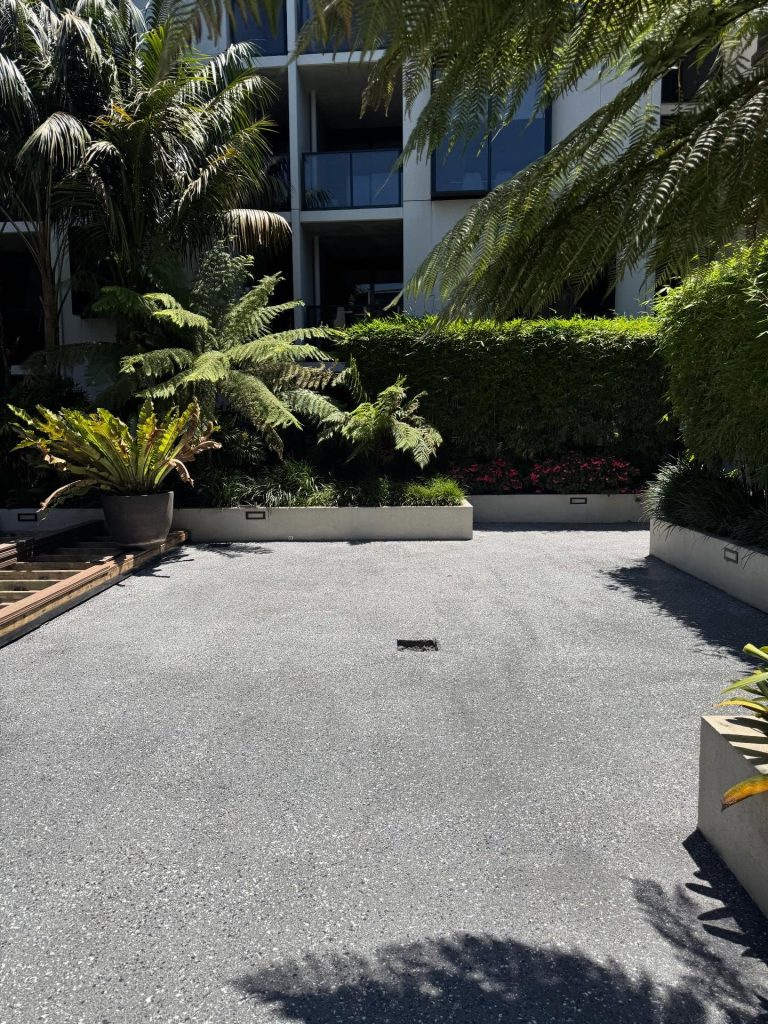
Anti-slip coatings and textured finishes for areas where fall risk creates liability concerns. Concrete resurfacing can include the application of slip-resistant finishes, improving safety around pool surrounds, ramps, and walkways.
Best for: Aged care facilities, schools, retail centres, commercial building entries, and public walkways.
Compliance note: Essential for meeting safety requirements in occupied commercial and public buildings.
8. Comprehensive Maintenance Contracts
Annual or multi-year inspection and repair programs for strata, body corporate, and commercial facilities. Contracts include baseline condition assessment, scheduled inspections, priority-based repair recommendations, and budget planning support.
Best for: Properties with multiple stakeholders, ongoing compliance requirements, or complex budgeting needs.
Request a Quote for Commercial Concrete Services Melbourne
Every commercial project starts with understanding the actual condition of your concrete and what outcome you need.
Free onsite assessment: We inspect the site, identify what’s causing the problems, and provide recommendations based on what we find—not what we want to sell.
Service area: All Melbourne metropolitan areas covered, with experience across the market from inner-city commercial buildings to outer suburban industrial sites.
What to expect: We respond to enquiries within one business day. Assessment visits are scheduled to suit your operations. Quotes include clear scope of work, materials, timelines, and warranty information.
Contact us:
Call for an initial discussion about your commercial concreting services requirements
Request a free quote through our online form
Describe your project—location, approximate area, current condition, and what outcome you need
Whether you’re managing a single warehouse or a portfolio of commercial properties, we provide guidance on the most practical and cost effective path forward.
Partner With Melbourne’s Concrete Maintenance Specialists
Get Your Commercial Concrete Assessment
Concrete crack repairs not only enhance the appearance of surfaces but also improve their structural integrity, preventing further damage and costly repairs in the future. Our team provides free onsite assessments for commercial and industrial properties across Melbourne, including Mornington Peninsula, Bass Coast, and Gippsland regions.
Assessment includes:
Visual inspection and photographic documentation
Identification of concrete cancer indicators and damage extent
Priority classification and repair recommendations
Preliminary cost estimates for repair versus replacement options
Compliance guidance for Australian Standards
We work with warehouses, factories, retail centres, car parks, strata properties, aged care facilities, schools, and commercial buildings of all types. Our approach is practical, technically experienced, and focused on delivering durable, cost effective solutions that protect your investment for the long term.
Contact our team today for expert advice on your commercial concrete maintenance requirements.
Service Areas: Melbourne Metro, Mornington Peninsula, Bass Coast, Gippsland
Frequently Asked Questions
How do you minimise disruption to our business operations?
Staged repair programs allow us to address critical safety issues first while scheduling less urgent work during low-impact periods. For retail and commercial spaces, this typically means nights, weekends, or seasonal lulls. For warehouses and factories, we coordinate around delivery schedules and production requirements.
Safety measures for occupied spaces include physical barriers, signage, dust control systems, and low-odour materials where available. We communicate schedules clearly and adjust when business needs change.
When is concrete cancer repair more cost effective than replacement?
Repair is typically the right solution when reinforcement section loss is under 20–30%, when damage is localised rather than widespread, and when protective coatings and ongoing maintenance can manage future exposure.
Replacement becomes more cost effective when corrosion is extensive across large areas, when structural capacity has been compromised, or when the cost of multiple patch repairs approaches or exceeds replacement cost. We provide honest assessment of both options with lifecycle cost analysis.
What maintenance schedule do you recommend for our property type?
Maintenance frequencies vary based on exposure conditions, property type, and existing condition:
Coastal properties: Annual inspections, resealing every 2-5 years, cleaning every 6–12 months
Car parks and driveways: Annual inspections, joint maintenance every 5–7 years, protective coating renewal every 2–8 years
Warehouse floors: Biannual inspections, crack monitoring, epoxy maintenance every 3–5 years depending on traffic
Strata balconies: Annual visual inspection, detailed assessment every 2–3 years, membrane replacement every 10–15 years
We develop customised schedules based on your specific conditions and budget constraints.
Do you provide maintenance contracts for strata and body corporate properties?
Yes. We offer annual and multi-year maintenance contracts that include:
Baseline condition assessment with photographic documentation
Scheduled inspection visits (annual or biannual)
Priority-based repair recommendations with budget estimates
Preferential scheduling and response times
Ongoing condition tracking and reporting for committee meetings
Contracts can be structured to align with body corporate financial years and levy collection cycles. Regular maintenance of concrete surfaces can extend their lifespan significantly, as timely repairs prevent minor issues from escalating into major problems.