

Nupave recommended external concrete specification — Hampton Park
Group 4 — South-East Growth Corridor — Reactive Clay
Concrete: 32 MPa (all exposed aggregate)
Indicative regional ground conditions
Hampton Park sits within the south-east growth corridor, where the natural profile commonly contains reactive clay, and where recent subdivision has often introduced variable-depth fill. Regional conditions suggest reactive clay may be present on many sites, but block-to-block variation is significant. The actual AS 2870 site classification for any individual property can only be established through a site-specific geotechnical investigation, taking into account soil profile, fill, moisture conditions and vegetation.
Regional ground movement (indicative, AS 2870)
Ground of this type may exhibit around 20–40 mm, and higher on more reactive pockets. This is a regional indicator only — actual movement at a given address depends on soil profile, moisture history and tree influence.
| Application | Slab thickness | Sub-base | Reinforcement |
|---|---|---|---|
| Path / foot traffic | 75–100 mm | 75 mm compacted crushed rock | SL72 |
| Driveway (cars up to 3 t) | 100 mm | 100 mm compacted crushed rock | SL72–SL82 |
| Occasional truck (3–10 t) | 125–150 mm | 100–125 mm compacted crushed rock | SL82 or rebar |
Nupave standard specification for typical conditions of this soil group — subject to site-specific assessment. Not a design substitute for a project engineer’s report where one is required.
| Saw-cut / control joint spacing (100 mm slab) | |
|---|---|
| Spacing between cuts | 2.4 m – 2.7 m (tighter than the standard 2.7–3.0 m on stable ground) |
| Cut depth & timing | At least 25 mm on a 100 mm slab (¼ slab thickness). Saw-cut as soon as the concrete can be cut without excessive ravelling — timing will vary with the mix, weather and saw type. A quick trial cut on a low-visibility edge or offcut is best practice before committing to the full grid. |
| What joints do | Closer joint spacing and properly proportioned panels encourage drying-shrinkage and thermal movement to occur at planned locations. Control joints reduce the risk of random cracking; they do not prevent cracking caused by inadequate support or differential ground movement. |
| Panel shape | Keep panels close to square (length ≤ 1.5× width). Long, narrow panels are more prone to random cracking regardless of joint spacing. |
Concrete grade
All Nupave exposed aggregate is poured at N32 as standard, regardless of soil group. The aggregate-exposure process removes the top cement paste layer, so the slab benefits from the higher compressive strength, improved durability and better abrasion resistance of N32. For non-exposed external concrete work, Nupave specifies N25 or N32 depending on application, anticipated loading, exposure conditions, selected finish and any site-specific engineering requirements. Concrete strength alone does not compensate for inadequate subgrade preparation, drainage or ground movement — it is one element within a properly detailed slab system.
Slip layer (poly membrane)
A polyethylene separation or slip membrane may be considered where required by the slab design or site conditions. It can reduce friction between the slab and compacted base during concrete shrinkage, but does not prevent settlement, heave or other vertical ground movement. Where a project engineer or geotechnical report specifies membrane use, that specification takes precedence.
Sub-base — why it’s a key part of the quote
Correct excavation, drainage, and a uniformly compacted crushed-rock base significantly reduce settlement and provide consistent support under the slab. It adds cost — both in laying and compacting the base, and in the extra excavation and spoil-removal that comes with the deeper dig — but that preparation is what a slab needs to perform over the long term. The preparation actually required may vary where uncontrolled fill, soft areas or unsuitable material are encountered on the specific site.
Curing coat
Concrete requires curing to develop its full design strength and durability. A liquid curing coat is applied after finishing, once bleed water has disappeared and in accordance with the manufacturer's requirements. It seals moisture into the concrete so hydration continues over the first 7 days — when the concrete's real strength develops. In summer, hot dry weather removes surface moisture quickly, so curing coat is essential to prevent surface crazing and reduced final strength. In winter, lower temperatures slow hydration, so curing is still required to reach design strength — the curing coat is still applied, and duration may need to be extended. Nupave applies curing coat as standard on all pours year-round.
Microfibres in concrete mix Optional add-on
What fibres actually do. Microfibres (polypropylene) get mixed through the whole pour and mainly control plastic shrinkage cracking in the first 24 hours, plus improve abrasion / impact resistance — they don’t add real structural tensile capacity. Macrofibres (heavier synthetic or steel) go further, adding post-crack toughness and some flexural strength.
Genuine benefit as an add-on: reduces fine / hairline shrinkage cracking and improves durability on any slab, sand or clay.
Should NOT replace mesh on soft or highly plastic clay soils: fibres provide no real resistance to the larger, ground-movement-driven cracks that mesh or rebar controls.
Important: This is Nupave’s enhanced standard specification for typical conditions in this suburb group, and is presented as a general reference. It is not a site-specific engineering design. Actual specifications for any individual property may vary based on site conditions, uncontrolled fill, tree influence, drainage, or requirements identified in a site-specific geotechnical or engineer’s report. Where an engineered design has been prepared for the site, that design takes precedence.
Exposed Aggregate Concrete for Driveways and Entryways Hampton Park
Professional Exposed Aggregate Installation and Restoration
Situated about 37 km southeast of Melbourne CBD, Hampton Park has earned a reputation as a large residential suburb with a diverse, family-focused community. Across Hampton Park, exposed aggregate concrete is a popular choice for driveways, paths, and entertaining areas.
Exposed aggregate concrete delivers a durable, slip-resistant finish that reveals natural stone textures beneath the cement surface—combining structural performance with decorative appeal for Melbourne properties.
Nupave specialises in exposed aggregate installation and restoration across Melbourne, the Mornington Peninsula, Bass Coast, Phillip Island, and surrounding regions. Our team handles everything from new driveways and pool surrounds to commercial flooring projects, using locally sourced aggregates and installation methods that meet Australian Standards.
Why Exposed Aggregate Concrete is Perfect for Melbourne Properties
Low Maintenance Requirements When Properly Sealed
Exposed aggregate concrete requires relatively low maintenance compared to many alternative exterior materials when the surface is properly sealed after installation. The primary ongoing requirement is periodic resealing—typically every two to three years, though high-traffic areas or surfaces with significant UV exposure may benefit from more frequent attention. This resealing protects against staining, helps resist water penetration, and maintains the visual enhancement that quality sealers provide.
General cleaning involves hosing down the surface and occasional washing with mild detergent to remove accumulated dirt, leaves, and other contaminants. Pressure washing can be used but should be applied at lower pressure settings and appropriate angles to avoid dislodging aggregate or damaging the sealer layer. Oil stains and spills should be cleaned promptly to prevent absorption into the concrete matrix.
Compared to pavers—which require joint sand replenishment, weed control, and periodic realignment—exposed aggregate presents fewer maintenance tasks. The continuous surface eliminates joints where weeds establish and where ants create sand displacement. Compared to timber decking or other materials requiring annual treatments, exposed aggregate offers a more straightforward maintenance schedule focused primarily on cleaning and periodic sealing.
At Nupave, we take a long-term approach to every project, with a focus on protecting the quality and finish well beyond installation. To support this, each completed surface is entered into our client care register, allowing us to monitor and notify you when maintenance such as resealing is due. This complimentary service is part of our standard of care, ensuring your concrete continues to look and perform as intended without relying on you to keep track of timeframes. It’s one of the ways we deliver not just a finished surface, but a lasting result.
Visual Appeal and Customisation Options
Exposed aggregate offers strong visual appeal through the natural beauty of stone, rather than relying on artificial colours or patterns. With a wide range of aggregates available—such as basalt, granite, and river pebbles—finishes can be tailored to suit different home styles and outdoor spaces. Variations in stone size and blend allow for further customisation, creating anything from subtle, refined textures to more pronounced, decorative finishes.
Long-Lasting Performance for High-Traffic Areas
The combination of structural concrete strength and durable natural stone aggregate creates surfaces capable of handling significant traffic loads over extended periods. For driveways, this means withstanding daily vehicle movements, visitor parking, and the concentrated loads that occur during turning and braking. For commercial applications, exposed aggregate handles pedestrian traffic volumes that would wear through less durable decorative treatments.
The key to this long-lasting performance lies in proper specification and installation. Strength grades appropriate to the intended use—N32 for standard residential applications, N40 for heavy-duty or commercial installations—provide the structural foundation. Adequate slab thickness, proper reinforcement with steel mesh or bars, and appropriate subbase preparation ensure the concrete can handle applied loads without cracking or settlement.
Control joints placed at correct spacing accommodate the natural shrinkage that occurs as concrete cures, preventing random cracking that would compromise both appearance and structural integrity. When these elements are correctly specified and installed, exposed aggregate delivers decades of reliable service with minimal degradation.
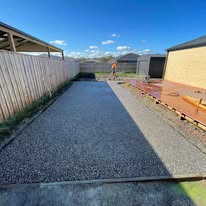
Is New Concrete Always Necessary?
Before investing in a brand new exposed aggregate driveway, it’s important to understand whether your existing concrete can be improved rather than replaced. Many surfaces that look beyond repair can often be transformed using alternative methods, avoiding the need for costly excavation. A professional inspection can give you a clear answer and help you avoid unnecessary expenses while still achieving a high-end result.
If you’re considering new exposed aggregate concrete, it’s worth checking whether your current surface actually needs to be removed. In some cases, existing concrete can be upgraded or refinished, providing a similar visual outcome without the cost and disruption of a full replacement. Having the area assessed first can help you make an informed decision and potentially save a significant amount of money.
Not every surface needs to be replaced — in many cases, there are more cost-effective options available.
Our Exposed Aggregate Services
Residential Exposed Aggregate
We create custom exposed aggregate installations for residential properties throughout Melbourne and surrounding areas. New driveways benefit from aggregate selection tailored to complement house colours and landscaping, with slab thickness and reinforcement designed for household vehicle loads and local soil conditions.
Pathways, patios, and outdoor entertaining areas receive the same attention to design and construction detail. Pool surrounds utilise aggregate types selected for barefoot comfort and slip resistance, with drainage slopes directing water away from the pool edge and house foundations.
Exposed aggregate resurfacing provides an option for existing concrete surfaces in sound structural condition. This overlay approach can transform plain or deteriorating concrete into attractive exposed aggregate finishes without the full excavation and base preparation required for new installations. Our consultation process assesses whether resurfacing is appropriate for each specific situation based on existing concrete condition and intended use.
Commercial Exposed Aggregate Flooring
Exposed aggregate is well suited to commercial applications, offering a durable, low-maintenance surface that performs under high pedestrian traffic while maintaining a professional appearance. It is commonly used for entrances, walkways, and outdoor areas, with finishes selected to align with the overall site design. When specified and installed correctly, it meets relevant standards and provides a long-lasting solution for both private and public spaces.
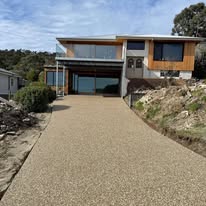
Popular Exposed Aggregate Finishes Available
Melbourne’s geology and established supplier network provide access to diverse aggregate types suitable for exposed concrete applications. The following options represent commonly available materials, each with distinct appearance characteristics and appropriate use cases:
- Basalt (Bluestone) – Deep blue-grey to black tones with angular facets. Extremely hard with high abrasion resistance. Best suited for driveways, commercial areas, and high-traffic zones. Matches heritage Melbourne streetscapes.
- Granite Chips – Available in varied colours including pink, grey, red, and cream. Coarse faceted appearance with good durability. Suitable for properties seeking warm colour tones or distinctive visual contrast.
- Crushed Quartzite – White or translucent crystalline appearance with high brightness. Creates a contemporary aesthetic with striking visual impact. Higher cost than standard aggregates; best used for feature areas or accent applications.
- Cream Pebble Blend – Light-toned rounded aggregates creating clean, modern appearances. Reduces heat absorption compared to darker stones. Popular for contemporary home designs and areas with significant sun exposure.
- Warm Earth Tones – Blends incorporating brown, rust, and ochre-coloured stones. Creates a rustic appearance complementing natural landscaping and timber elements. Appropriate for properties seeking organic aesthetic integration.
- Mixed Heritage Blend – Aggregates selected to coordinate with established Victorian architectural styles. Typically incorporates basalt and cream tones matching period home characteristics.
- Custom Project Blends – Tailored combinations designed for specific architectural requirements. Samples can be prepared to confirm appearance before project commencement.
Aggregate sizes typically available include 7mm (fine texture), 10-14mm (standard exposure), and up to 20mm for pronounced texture applications. Colour shades vary between batches due to the natural stone origin, so sample approval and consistent batch sourcing are essential for consistent project appearance.
Our Professional Installation Process
Every exposed aggregate project begins with a detailed site assessment, where we evaluate soil conditions, drainage, access, and overall layout. This allows us to recommend the right preparation method and help you select an aggregate that suits your home, surroundings, and intended use.
Preparation is key to long-term performance. The area is excavated, a compacted crushed rock base is installed, and reinforcement is placed to provide strength and stability. Formwork and drainage are carefully set to ensure the finished surface performs as well as it looks.
Concrete is then poured, levelled, and finished to the required specification, with timing carefully controlled to achieve consistent aggregate exposure. A surface retarder is applied and later washed off to reveal the natural stone, creating the textured finish exposed aggregate is known for.
Once cured, the surface is sealed to protect against staining, moisture, and wear while enhancing the natural colour of the stone. With proper installation and ongoing maintenance, exposed aggregate delivers a durable, long-lasting result suited to Melbourne conditions.
Get Your Free Exposed Aggregate Quote Today
Nupave provides professional exposed aggregate installations across Melbourne and surrounding regions, including metropolitan Melbourne, the Mornington Peninsula, Bass Coast, and West and South Gippsland.
Every project begins with a free onsite consultation, where we assess your site conditions, discuss design options, and help you select the right aggregate to suit your property. You’ll receive clear, detailed pricing along with expert advice to ensure you’re making the right decision from the start.
Our commitment is to deliver high-quality workmanship using premium local materials, installed to Australian Standards for long-term performance.
Contact us today to arrange your consultation.
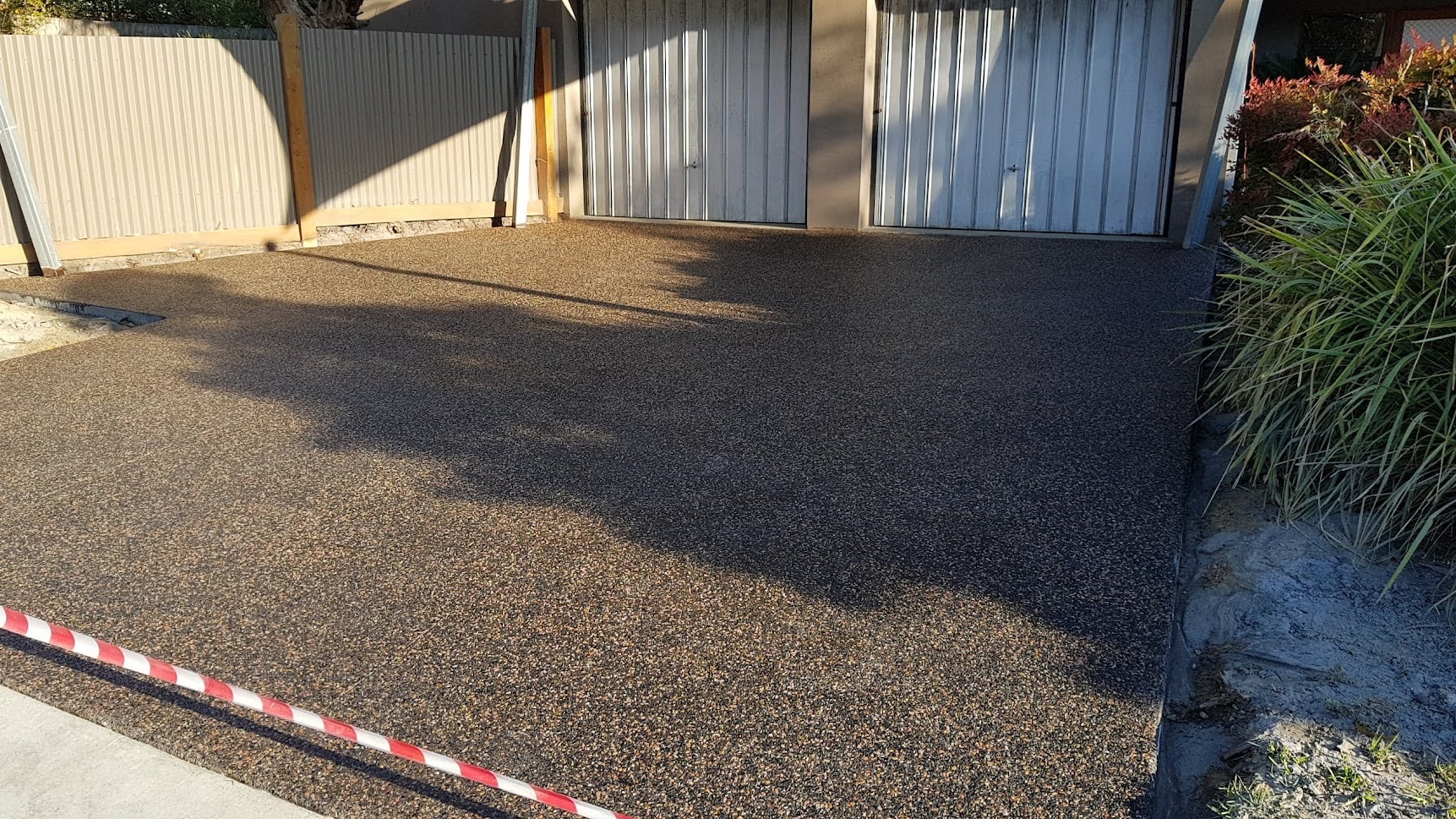
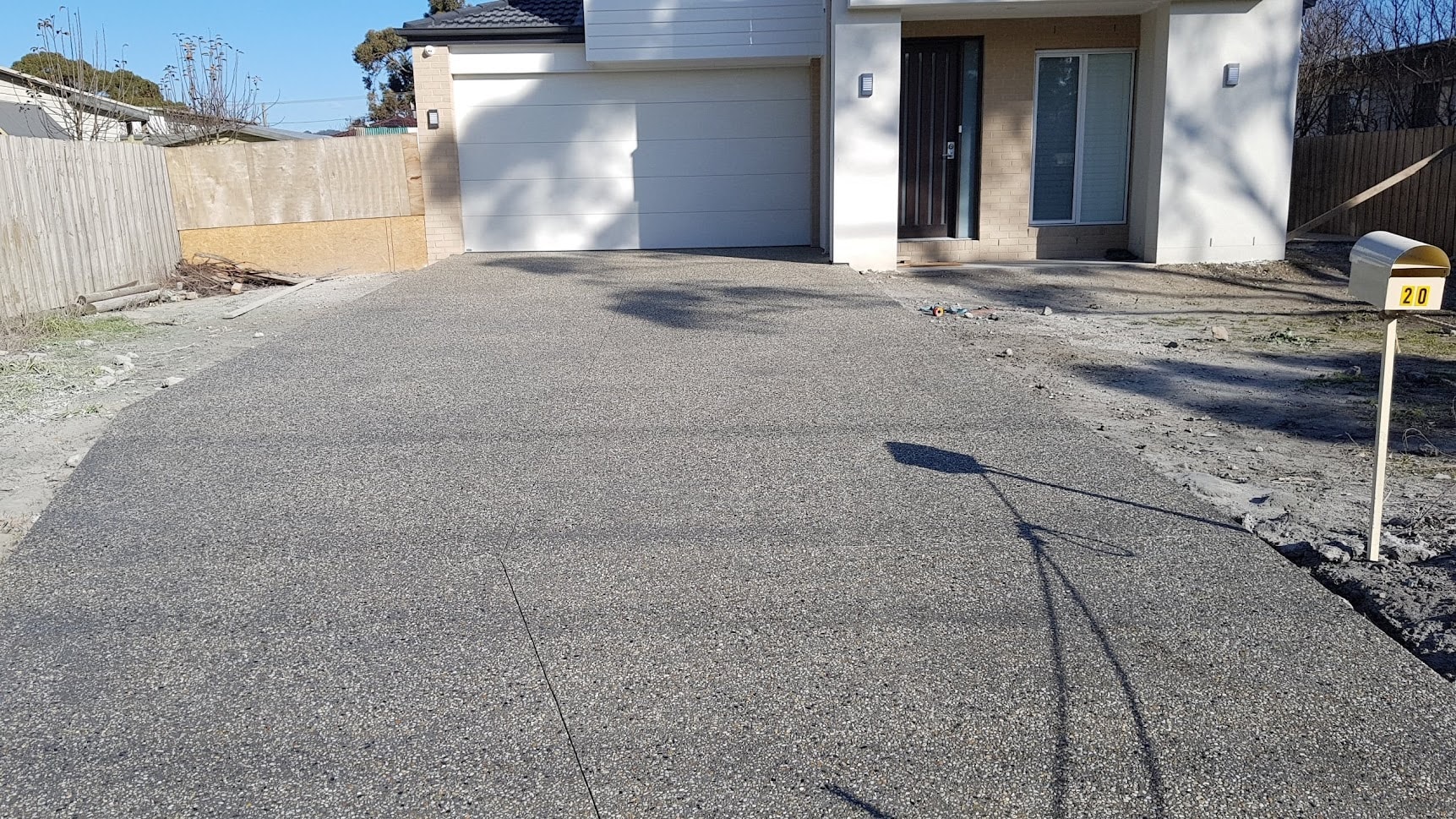
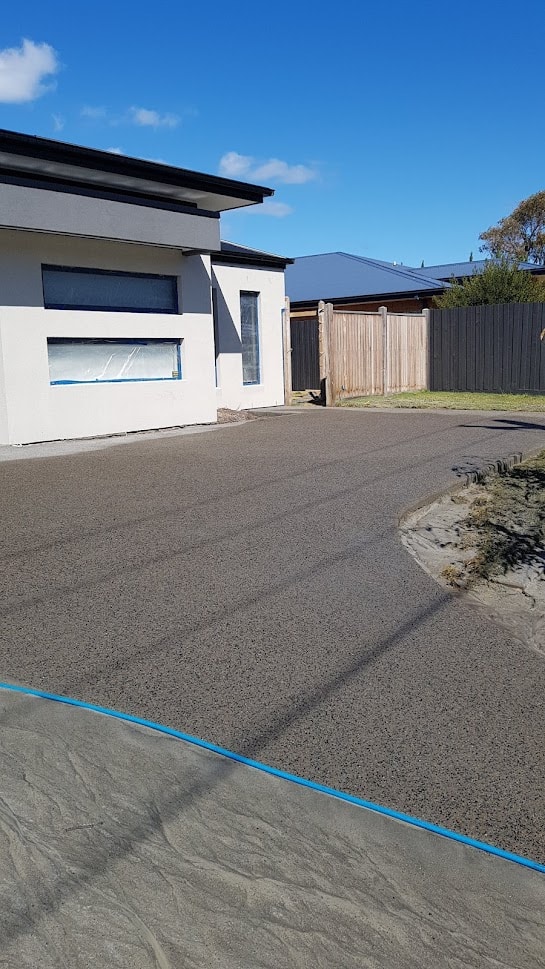
Hampton Park homes use exposed aggregate for both driveways and backyard paths. If the underlying slab is still structurally sound, spray-on concrete resurfacing in Hampton Park can achieve a similar decorative look without the cost of replacement. Nearby areas such as Hallam share similar conditions, making exposed finishes a popular option across the region. We provide full exposed aggregate concrete Melbourne services, covering the broader City of Casey area.