Concrete Sealing Safety Beach
Concrete sealing in Safety Beach isn’t just about looks. The sealer protects against oil stains, tyre marks, moss, mildew and UV damage. Done at the right intervals it keeps the surface performing — skip it and you’ll be redoing the underlying work much sooner.
Safety Beach sealing for marina-side moisture and efflorescence
Safety Beach properties near the marina and foreshore can deal with damp conditions, salt exposure and visible efflorescence on porous surfaces. Sealing helps reduce water entry, protect appearance and keep smooth concrete and decorative finishes easier to maintain.
Sealer choice matters
Different surfaces need different sealers. A driveway needs UV stability and traffic resistance; a pool surround needs anti-slip and chlorine resistance; an indoor floor can use a higher-gloss water-based sealer. We pick the right product for the application.
Slippery driveway? It’s the sealer
Most slippery driveways aren’t a concrete problem — they’re a sealer problem. A glossy topcoat with no grit makes the surface slick the moment it gets wet. The fix is to strip the bad sealer and apply a fresh anti-slip topcoat in the right tone.
Why Nupave
Nupave services metro Melbourne, the Mornington Peninsula, Bass Coast and South Gippsland. Shaun is based in Clyde North and still runs the work directly. You get practical advice, a free on-site assessment, a written quote and an in-house team doing the job.
Other Concrete Services in Safety Beach
Frequently Asked Questions
Will the colour fade over time?
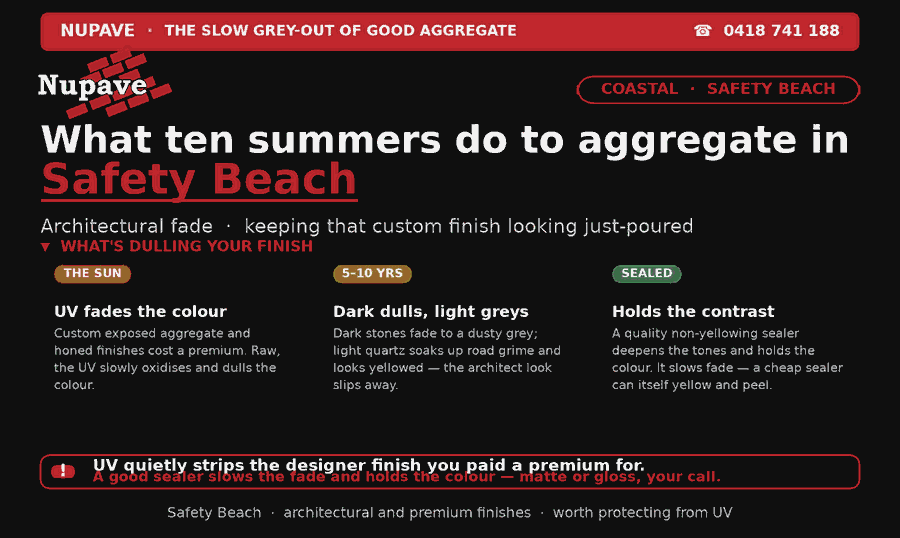
All outdoor coatings can change over time with sun, wear and cleaning. A proper sealer helps protect the colour, and resealing every 2–5 years keeps the surface looking better and helps stop it drying out or wearing unevenly.
How often should I reseal?
External concrete every 2–5 years depending on traffic and sun exposure. Indoor floors can go longer, depending on use. We tell you what makes sense rather than selling a reseal that isn’t needed.
Can sealing fix a slippery driveway?
Yes, with the right product. A sealer with anti-slip additive added to the topcoat changes a glossy surface into a textured one. We size the additive to the application.
Call 0418 741 188 or email enquiries@nupave.com.au for a free on-site assessment and a written quote within a few business days. No deposit required.