

Nupave recommended external concrete specification — Cowes
Group 7 — Bass Coast / Phillip Island — Coastal Dune to Inland Clay
Concrete: N25 or N32 (depending on application)
Indicative regional ground conditions
Cowes is in the Bass Coast / Phillip Island region, where the profile transitions from stable coastal dune sand near the ocean to reactive clay further inland. Salt and wind exposure applies close to the coast. The actual AS 2870 site classification for any individual property can only be established through a site-specific geotechnical investigation, taking into account soil profile, fill, moisture conditions and vegetation.
Regional ground movement (indicative, AS 2870)
Ground of this type may exhibit generally low on stable coastal sand, increasing further inland on the transition to reactive clay. This is a regional indicator only — actual movement at a given address depends on soil profile, moisture history and tree influence.
| Application | Slab thickness | Sub-base | Reinforcement |
|---|---|---|---|
| Path / foot traffic | 75–100 mm | 75 mm compacted crushed rock | SL72 |
| Driveway (cars up to 3 t) | 100 mm | 75–100 mm compacted crushed rock | SL72–SL82 |
| Occasional truck (3–10 t) | 125–150 mm | 100 mm compacted crushed rock | SL82 or rebar |
Nupave standard specification for typical conditions of this soil group — subject to site-specific assessment. Not a design substitute for a project engineer’s report where one is required.
| Saw-cut / control joint spacing (100 mm slab) | |
|---|---|
| Spacing between cuts | 2.4 m – 3.0 m (assess per block — tighter on inland clay transition) |
| Cut depth & timing | At least 25 mm on a 100 mm slab (¼ slab thickness). Saw-cut as soon as the concrete can be cut without excessive ravelling — timing will vary with the mix, weather and saw type. A quick trial cut on a low-visibility edge or offcut is best practice before committing to the full grid. |
| What joints do | Closer joint spacing and properly proportioned panels encourage drying-shrinkage and thermal movement to occur at planned locations. Control joints reduce the risk of random cracking; they do not prevent cracking caused by inadequate support or differential ground movement. |
| Panel shape | Keep panels close to square (length ≤ 1.5× width). Long, narrow panels are more prone to random cracking regardless of joint spacing. |
Concrete grade
Nupave specifies N25 or N32 concrete depending on the intended application, anticipated loading, exposure conditions, selected finish and any site-specific engineering requirements. N32 may be specified where increased compressive strength, abrasion resistance or durability is required. Concrete strength alone does not compensate for inadequate subgrade preparation, drainage or ground movement — it is one element within a properly detailed slab system.
Slip layer (poly membrane)
A polyethylene separation or slip membrane may be considered where required by the slab design or site conditions. It can reduce friction between the slab and compacted base during concrete shrinkage, but does not prevent settlement, heave or other vertical ground movement. Where a project engineer or geotechnical report specifies membrane use, that specification takes precedence.
Sub-base — why it’s a key part of the quote
Correct excavation, drainage, and a uniformly compacted crushed-rock base significantly reduce settlement and provide consistent support under the slab. It adds cost — both in laying and compacting the base, and in the extra excavation and spoil-removal that comes with the deeper dig — but that preparation is what a slab needs to perform over the long term. The preparation actually required may vary where uncontrolled fill, soft areas or unsuitable material are encountered on the specific site.
Curing coat
Concrete requires curing to develop its full design strength and durability. A liquid curing coat is applied after finishing, once bleed water has disappeared and in accordance with the manufacturer's requirements. It seals moisture into the concrete so hydration continues over the first 7 days — when the concrete's real strength develops. In summer, hot dry weather removes surface moisture quickly, so curing coat is essential to prevent surface crazing and reduced final strength. In winter, lower temperatures slow hydration, so curing is still required to reach design strength — the curing coat is still applied, and duration may need to be extended. Nupave applies curing coat as standard on all pours year-round.
Microfibres in concrete mix Optional add-on
What fibres actually do. Microfibres (polypropylene) get mixed through the whole pour and mainly control plastic shrinkage cracking in the first 24 hours, plus improve abrasion / impact resistance — they don’t add real structural tensile capacity. Macrofibres (heavier synthetic or steel) go further, adding post-crack toughness and some flexural strength.
Genuine benefit as an add-on: reduces fine / hairline shrinkage cracking and improves durability on any slab, sand or clay.
Should NOT replace mesh on soft or highly plastic clay soils: fibres provide no real resistance to the larger, ground-movement-driven cracks that mesh or rebar controls.
Salt / coastal exposure
Direct ocean exposure suburbs (Cape Woolamai, Kilcunda, Inverloch, Cowes and similar) require higher exposure classification. Nupave uses B1/B2 exposure concrete (N32 minimum) and increases concrete cover to reinforcement to protect against saline-induced corrosion.
Important: This is Nupave’s enhanced standard specification for typical conditions in this suburb group, and is presented as a general reference. It is not a site-specific engineering design. Actual specifications for any individual property may vary based on site conditions, uncontrolled fill, tree influence, drainage, or requirements identified in a site-specific geotechnical or engineer’s report. Where an engineered design has been prepared for the site, that design takes precedence.
Concreting in Cowes
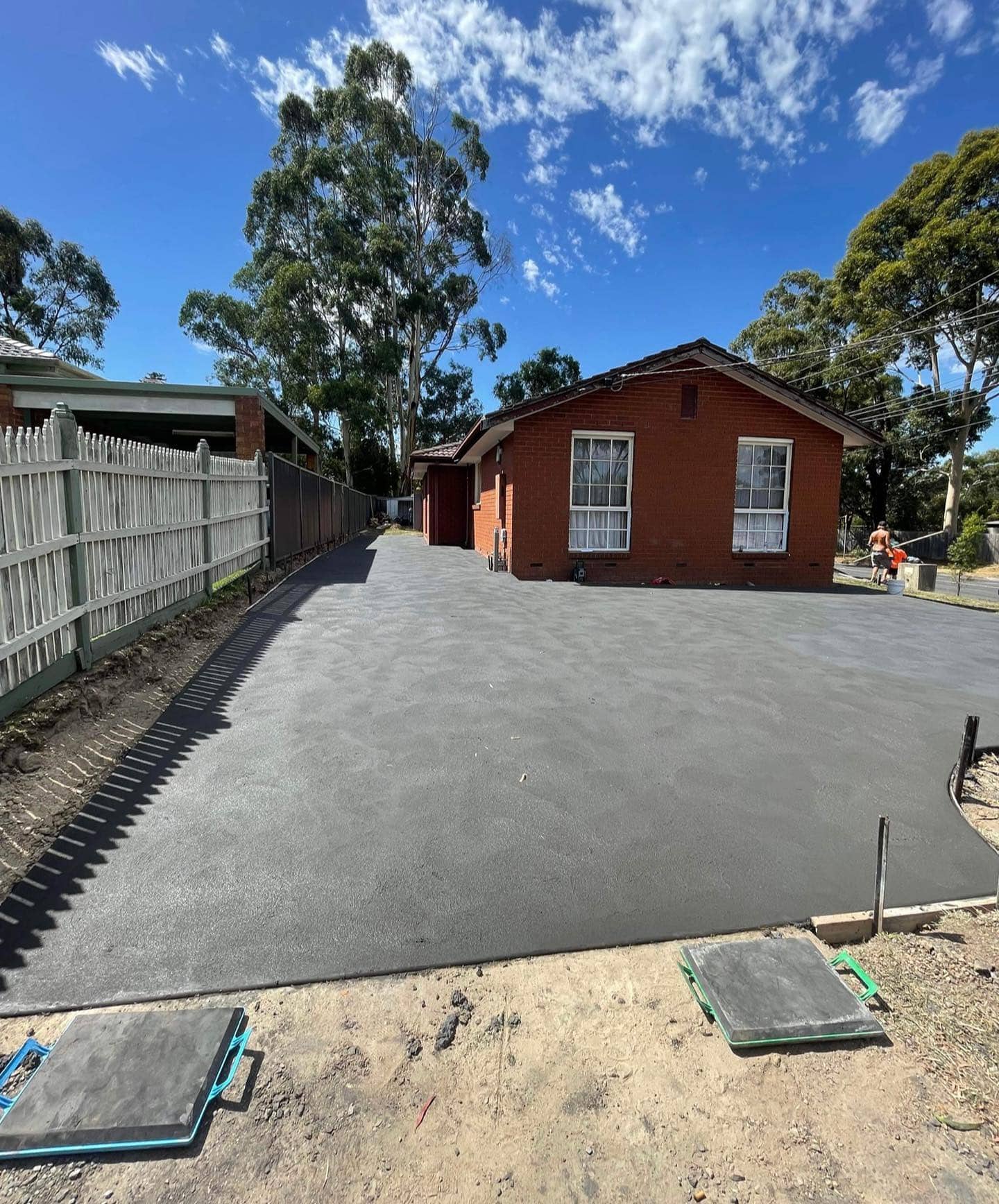
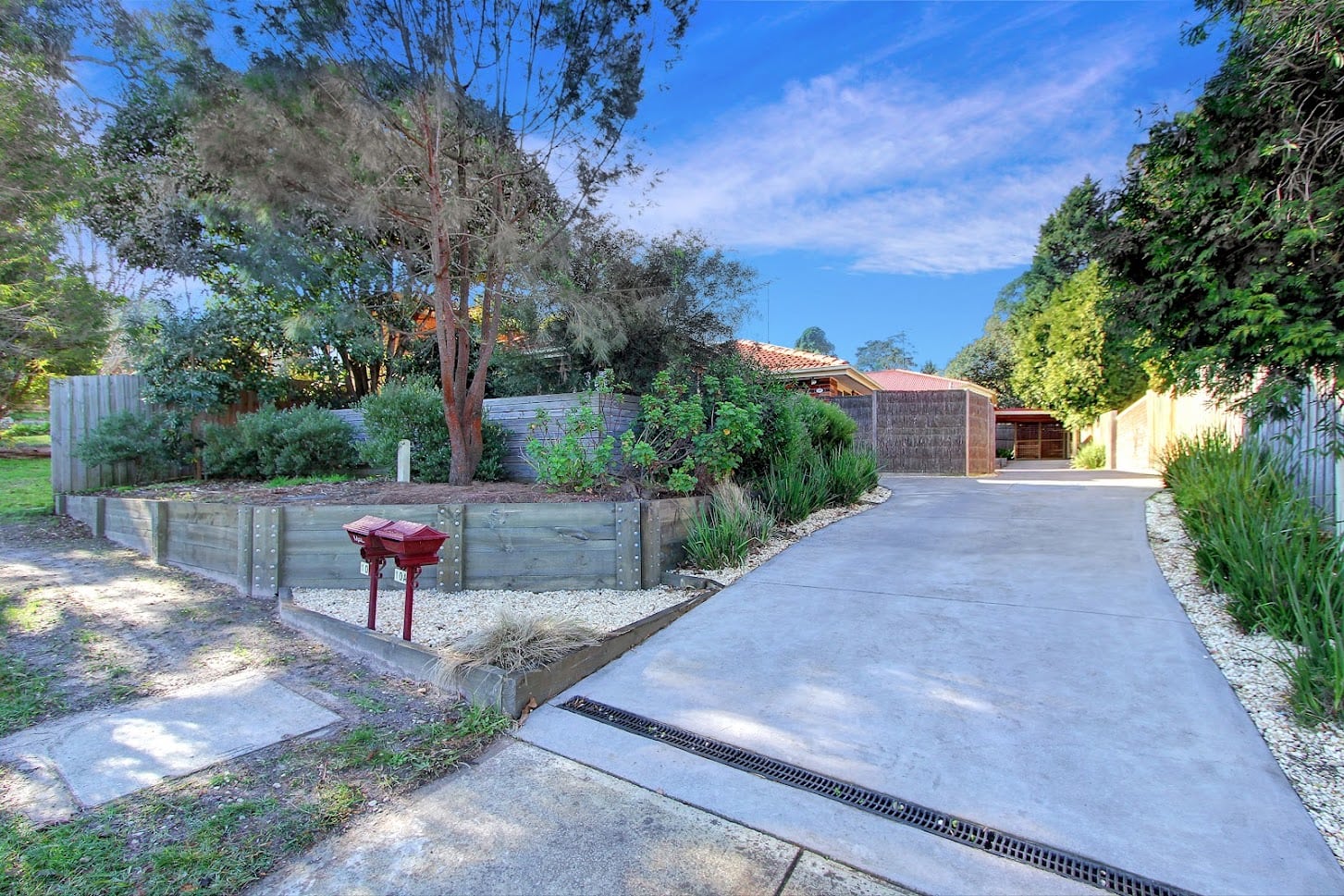
We pour new concrete across Cowes — driveways, paths, slabs and entertaining areas — building each one for the site so it doesn’t crack or heave down the track. In an area like Cowes, a new driveway is part of the home’s value — so we get the site classification, base and reinforcement right before a single barrow is poured. Every site is different, so below is what shapes how we approach concreting in Cowes.
Concreting across Cowes
As the main township on Phillip Island, ~140km south-east of Melbourne CBD, Cowes is an area we cover regularly. Whether you’re close to Cowes Community Arts Centre, Phillip Island Nature Parks (Penguin Parade, western end of the island) and Cowes beach and Jetty Road dining precinct, we pour driveways and slabs right across Cowes.
Concrete is one of the most reliable and practical choices for outdoor surfaces on the Western Port Bay coast in Cowes. Whether you need a functional driveway, an attractive patio, or a safe pool surround, concrete delivers proven benefits that make it a smart investment for coastal homes and marina properties in this area.
As Phillip Island’s main town, Cowes mixes year-round homes with a large stock of holiday houses, and the salt air off Western Port works on concrete here all year whether anyone is home or not.
Why Concrete Works in Cowes
Melbourne’s climate can be tough on outdoor surfaces, with salt air, ocean winds, and seasonal temperature swings. Concrete handles these conditions with proven longevity of 25 years or more and versatile design options in grey and colour. Unlike many alternatives, concrete requires minimal ongoing maintenance—occasional cleaning is all you need.
The sandy clay soil typical in this area needs proper compaction before pouring to ensure a long-lasting result. When properly installed, your concrete surfaces will stay strong and attractive for decades.
Standard Grey and Coloured Concrete
Standard grey concrete is a timeless choice that works beautifully with any coastal homes and marina properties. For something more distinctive, coloured concrete opens up exciting design possibilities—from warm earth tones to bold statement colours. For inspiration, explore the range of coloured concrete options from Vicmix.
Versatile Applications
Concrete works beautifully for driveways, pathways and crossovers, patios and entertainment areas, pool surrounds, and garden edging. Properties in nearby suburbs like Ventnor, Rhyll and Smiths Beach have discovered the benefits of quality concrete installations, and we understand the specific needs of coastal homes and marina properties in the Cowes region.
Your Concrete Experts
Whether it’s a residential driveway or a commercial concrete project, Nupave has the experience to deliver quality results. We understand the unique conditions in Cowes and deliver solutions built to last.
Does your concrete need replacing? If your existing concrete is cracked, uneven, or showing significant wear, sometimes a fresh pour is the smartest option. We’ll always be honest—if your structure is still sound, resurfacing might save you thousands while giving you a like-new finish.
Ready to discuss your concrete project? Contact Nupave to get started on your Cowes property.
Concrete Services in Cowes
Frequently Asked Questions
How much does concrete cost compared to pavers?
Concrete is generally more cost-effective than pavers, especially for larger areas like driveways. It also requires less ongoing maintenance, making it better value long-term for Cowes properties.
How long does a concrete pour take?
Most residential concrete jobs in Cowes take one to three days depending on size and preparation needed. A standard driveway is typically poured in a single day, with curing time of around seven days before vehicle use.
Is sandy soil a concern for concrete foundations?
Sandy soil drains well, which is good for concrete. However, it can shift if not properly compacted. We ensure a solid compacted base before pouring to prevent settlement issues.
Cowes has a mix of waterfront homes, light industrial and original family streets, and the concrete here takes a beating from both weather and daily traffic. Our concrete resurfacing in Cowes handles all of it. Part of the Bass Coast Shire.

Nearby Areas We Service
Nupave services Cowes and the surrounding Bass Coast Shire area. Nearby concreting areas include Ventnor, Rhyll, Smiths Beach, Cape Woolamai, Newhaven, San Remo.