Concrete Resurfacing vs Replacement: Which Solution Is Right for Your Melbourne Property?
Concrete resurfacing is usually the right solution when your existing concrete is structurally sound but worn, stained, slippery or outdated. Concrete replacement is the better choice when the slab has deep cracks, severe settling, movement, drainage failure or structural damage.
Choosing between concrete resurfacing and concrete replacement affects the cost, timeline and long-term durability of driveways, patios, pool surrounds and other outdoor concrete areas. The right option depends on the condition of the existing concrete, your budget, the amount of disruption you can tolerate and the finished look you want.
Below is a practical comparison of concrete resurfacing vs replacement for Melbourne homeowners. This comparison is based on practical onsite experience rather than generic online averages. The goal is to give Melbourne homeowners a realistic view of cost, timeframe, disruption and suitability, so they can choose the option that actually suits their concrete.
Concrete Resurfacing vs Replacement: Key Differences
The main difference comes down to whether you keep the existing slab or remove it completely.
Concrete resurfacing works over the existing concrete surface.
Concrete replacement involves a complete tear out and a new concrete pour.
Concrete resurfacing is a method that involves applying a cement-based overlay over existing concrete to restore its strength and appearance without the need for demolition, making it ideal for surfaces that are structurally sound but cosmetically damaged. In many exposed aggregate-style resurfacing systems, a polymer-modified resurfacing material is applied after surface preparation, followed by base colour coats, decorative fleck coats and sealer.
Concrete replacement involves demolishing and excavating the old slab, preparing the base, and pouring a new concrete surface, which is necessary when significant structural issues make resurfacing unsuitable. A full concrete replacement may include removal, disposal, excavation, crushed rock base preparation, reinforcement, formwork, a concrete pour, finishing, curing and sealing.
Both approaches can deliver long lasting results, but they solve different concrete needs. Resurfacing is a cost effective way to refresh a sound concrete surface. Replacing concrete is a more durable solution when the old concrete has lost structural integrity.
Not every enquiry should turn into a resurfacing job.
On this project, the client originally wanted to resurface the existing driveway and extend the area at the same time. Preserving the existing concrete was their preferred option, partly because reducing waste and avoiding unnecessary demolition was important to them.
After assessing the slab condition, layout, extension requirements and likely cost of each option, we advised that a new concrete pour would be the better long-term solution. In this case, resurfacing may have improved the appearance, but once the extension and replacement bays were factored in, it was no longer the most practical or cost-effective recommendation.
Their second option was a permeable surface, which is not a service we currently provide. Rather than pushing a resurfacing solution that was not the best fit, we referred them to someone within our trusted service provider network.
At Nupave, our job is not to sell resurfacing at all costs. Our job is to assess the concrete honestly and recommend the option that makes the most sense for the surface, the budget, the environmental goals and the long-term result.

Suitability and Concrete Condition Assessment
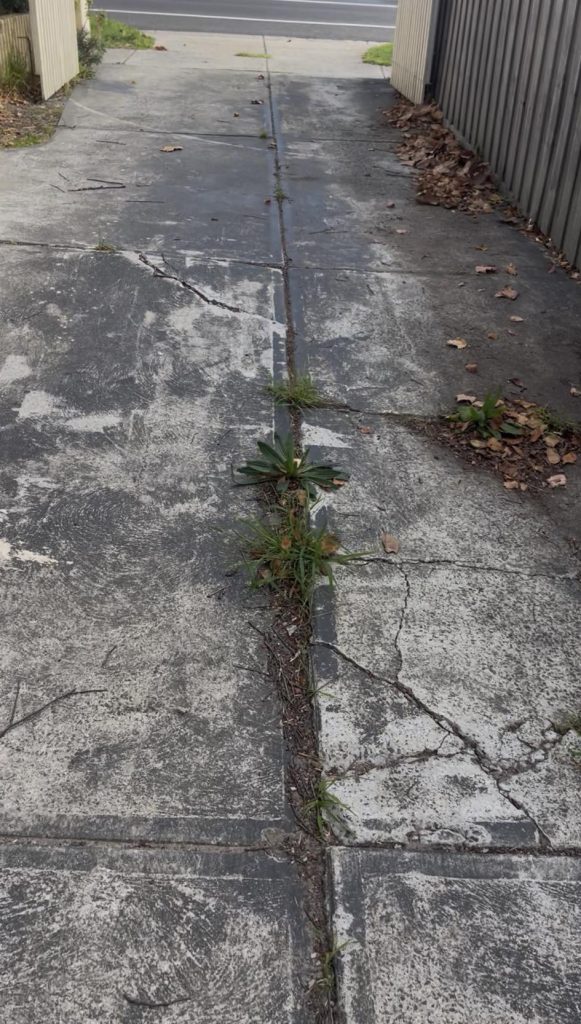
Concrete condition is the first thing to assess before comparing price or decorative finishes. A tired concrete driveway is not automatically a candidate for replacement, but damaged concrete should not be covered with resurfacing if the slab is moving or failing.
When Concrete Resurfacing Is Suitable
Choose concrete resurfacing when the existing concrete is structurally sound and the main problems are surface wear, staining, fading, poor visual appeal or minor cracks.
Resurfacing is suitable when the existing slab has minor surface damage, such as small cracks or stains, but remains structurally sound. It is commonly used for driveway resurfacing, patios, pathways and pool surrounds where the homeowner wants better slip resistance and improved curb appeal without a complete tear out.
Concrete resurfacing is suitable for minor surface damage such as small cracks, stains, or discoloration, while replacement is recommended for deep cracks, severe settling, or structural damage. Existing levels and drainage must also be generally acceptable, because resurfacing follows the existing concrete slab rather than rebuilding its shape from the ground up.
When Replacement Is Necessary
Choose concrete replacement when the concrete slab is severely cracked, sinking, lifting, breaking apart or affected by foundation issues.
Signs that indicate concrete should be replaced include deep structural cracks, severe settling, or extensive spalling that affects the integrity of the slab. Concrete that has visible rebar or significant structural damage is typically not a candidate for resurfacing and should be replaced to maintain safety and integrity.
If the concrete surface is uneven due to soil movement or tree root intrusion, it may require replacement rather than resurfacing to provide long-term stability. Replacement is also more suitable when vehicle traffic has increased, the slab needs higher load capacity, levels need to be changed, drainage needs major correction or the old driveway needs a full redesign.
Cost Comparison
Costs vary because concrete resurfacing and concrete replacement are not the same system. Resurfacing keeps the existing slab in place. Replacement removes the old concrete and builds a new slab from the base up.
Concrete Resurfacing Costs
Concrete resurfacing typically costs between $50 and $90 per square metre, while exposed aggregate-style resurfacing in Melbourne is commonly priced around $55-$90 per square metre depending on preparation, repairs, grinding, primer, base coats, fleck coats, sealer system and job size.
The cost of decorative concrete resurfacing varies, with basic spray-on options costing between $50 and $90 per square metre, while more intricate designs like stencilled concrete can range from $70 to $130 per square metre. The final concrete resurfacing cost depends on several factors, including the condition of the existing concrete surface, the amount of crack repair needed, the chosen decorative finishes and whether the resurfacing material can bond properly after proper preparation.
Resurfacing is generally the more cost-effective option, especially when the existing concrete is in decent shape, while replacement is often necessary for severely damaged slabs that cannot be effectively repaired. Resurfacing can save homeowners 40–60% compared to the cost of full concrete replacement, making it a more budget-friendly option for minor cosmetic issues.
Concrete Replacement Costs
Concrete replacement ranges from $180 to $345 per square metre due to the additional costs of demolition and new concrete pouring. For new exposed aggregate concrete in Melbourne, a practical trade-based guide is commonly around $130–$200+ per square metre, depending on site access, excavation, drainage, slab thickness, reinforcement, concrete mix, aggregate choice and finish quality.
Replacement costs more because it is a full replacement process. It can include breaking up and removing old concrete, disposal, base preparation, formwork, reinforcement, concrete supply, placing, finishing, washing off exposed aggregate, sealing, labour, machinery and access management.
This does not make new concrete a poor choice. It simply means concrete replacement is a larger scope of work. When the concrete is severely cracked, sinking or structurally failing, replacement may be the better long term solution because resurfacing would only be a temporary solution over a failed slab.
See a real-world example of resurfacing savings compared to replacement
Time and Practicality
For a standard 100m² driveway, new exposed aggregate concrete is not usually a 2–3 week installation process. In many cases, demolition, preparation, forming, pouring and finishing can be completed in around 4 working days, depending on access, weather, drainage, excavation requirements, base preparation and site conditions.
Exposed aggregate resurfacing is also not instant. A properly prepared resurfacing job may take around 2–4 working days depending on whether pressure cleaning, grinding, crack repairs, priming, base coats, decorative fleck coats and sealing are required. The broader resurfacing process is generally quicker than replacement, often completed in just 2 to 5 days, which minimizes disruption to daily life and property use.
The real practical difference is usually disruption. New concrete often involves removing the existing slab, disposing of old concrete, preparing the base, setting formwork, installing reinforcement, concrete trucks, possible pump or machinery access, more noise, more dust and more waste leaving the property.
Resurfacing keeps the existing slab in place. That generally means minimal disruption, less mess, less waste, less heavy machinery and less impact on landscaping, garden edges and existing site levels, provided the original slab is suitable.
Both new concrete and resurfaced concrete need curing time before normal vehicle traffic. As a cautious guide, around 7 days before driving on the surface is a safer expectation, although this can vary depending on the product, temperature, weather, site conditions and contractor advice.
Durability and Longevity
Lifespan is another major difference in the resurfacing vs replacement decision. New concrete generally lasts longer because it is a full new slab. Resurfacing can still be highly practical, but it depends on the condition of the original concrete.
Resurfaced Concrete Durability
Concrete resurfacing or sealing can keep decorative concrete surfaces looking their best for 10 to 15 years, making it a cost-effective solution for homeowners looking to refresh their driveways or patios. When installed over sound concrete and maintained correctly, concrete resurfacing can last 10–20+ years.
Its lifespan depends heavily on surface preparation, the condition of the original concrete, traffic levels, sealing, drainage and resealing intervals. If the existing slab moves, large cracks open up, tree roots lift the slab or soil movement continues underneath, the resurfaced concrete surface may crack as well.
The advantage of resurfacing is not that it outlasts new concrete. The advantage is that it can restore and transform suitable existing concrete for a much lower cost and with less disruption than demolition and replacement. Like many concrete coatings and sealing systems, it can help reduce surface wear, moisture absorption and weather exposure, which may support the long-term life of the concrete when properly maintained.
Many resurfacing claims are based on expected lifespan, not decades of observed results. Because Nupave has been operating for over 30 years, we can speak from real-world experience about how resurfaced concrete performs over time when the slab is suitable, preparation is done properly and resealing is maintained.
New Concrete Durability
A well-built and properly maintained new concrete slab can last 30–50 years or more, depending on ground conditions, drainage, reinforcement, concrete quality and ongoing use.
Replacement provides a completely fresh structural foundation. It allows the contractor to rebuild the base, correct levels, improve drainage, install suitable reinforcement and complete a new concrete pour designed for the expected foot traffic, vehicle traffic and site conditions.
Longevity still depends on quality materials, proper preparation and good drainage. Melbourne properties can be affected by reactive soils, soil movement, tree roots and weather exposure. Freeze thaw cycles are less of a daily issue in most Melbourne suburbs than in colder climates, but temperature change, moisture, UV exposure and drainage still affect long term durability.
Design and Aesthetic Options
Both resurfacing and replacement can improve visual appeal, but they offer different levels of design control. The choice resurfacing or replacement depends on whether you want to transform the surface or rebuild the whole area.
Resurfacing Design Flexibility
Concrete resurfacing improves the aesthetic appeal of surfaces, allowing for a variety of decorative finishes that can mimic more expensive materials like natural stone or tile.
Concrete resurfacing offers a variety of decorative finishes, including stenciled, and colored options that can mimic the appearance of more expensive materials like natural stone or brick. Nupave also offers Timbercrete, Cut Stone and Slate Impression concrete resurfacing. Modern resurfacing techniques allow for customization with various colors, textures, and patterns, providing homeowners with significant design flexibility for their concrete surfaces.
After surface preparation, a polymer-modified resurfacing compound is applied to the existing concrete. Two spray coats of the chosen base colour are then installed, followed by 1–3 decorative fleck coats to mimic the natural variation of exposed aggregate stone. The result is an exposed aggregate-style resurfacing finish, not a full-depth exposed aggregate concrete pour.
Resurfacing can also include stencil patterns, spray paving, coloured finishes and slip-resistant textures for driveways, paths and pool surrounds. It can transform tired concrete areas without the cost of replacing concrete, although it cannot significantly change the layout, slab thickness, drainage fall or levels. It is also different from polished concrete, which is generally a grinding and polishing process used on suitable concrete surfaces.
Replacement Design Freedom
Concrete replacement gives more control because the contractor starts again. This allows new shapes, new levels, better drainage, new edges, borders, patterns, decorative aggregate choices and a full redesign of the concrete driveway or outdoor area.
Replacement is useful when the old driveway layout no longer works, when levels need to tie into garages or paths, or when the property needs a different structural specification. It also allows changes to slab depth, reinforcement and concrete strength.
Decorative concrete resurfacing can enhance curb appeal and property value, making it a popular choice for homeowners looking to refresh their outdoor spaces without the cost of full replacement. Replacement can also increase property value when the existing concrete is structurally poor or the homeowner wants a completely new design.
Concrete Resurfacing vs Replacement: Which Should You Choose?
Choose concrete resurfacing when the existing concrete is structurally sound and your main goals are better appearance, improved slip resistance and a more modern surface. It is often more cost effective for minor cracks, stains, fading, surface wear and outdated concrete areas.
Choose concrete replacement when there are structural issues, deep cracks, severe settling, uneven slabs, major spalling, visible rebar, drainage failure, base failure or major changes required to levels and layout. In those cases, resurfacing may only hide the problem, while full concrete replacement addresses the cause.
Resurfacing is an eco-friendly option as it reduces waste by preserving existing concrete, avoiding the emissions associated with demolition and new concrete production. It is often the lower-disruption alternative when the slab is suitable. Replacement is the stronger long term solution when the slab itself has failed.
The best next step is a professional assessment of the existing concrete, including slab condition, drainage, movement, surface wear, cracking and intended use.
At Nupave, we provide free onsite quotes across Melbourne and assess whether resurfacing or full concrete replacement is the better option. Our goal is not to sell resurfacing where it does not belong. If the existing slab is structurally unsound, badly moving, severely cracked or likely to fail, we will explain why replacement may be the stronger long-term choice.
We value honest advice over short-term sales. If resurfacing is suitable, we will recommend the right preparation, repair and coating system for the surface. If we believe the area is unsuitable, we will tell you upfront and, where possible, point you toward the right trade or replacement option instead.
This approach helps clients avoid spending money on a surface that may not perform properly. The right solution depends on the concrete beneath it, not just the finish applied on top.