
Blushing Sealer: Why Concrete Sealer Turns White and How to Fix It
Introduction
Blushing sealer is a white, cloudy, milky or hazy defect that appears when moisture becomes trapped beneath or within a drying concrete sealer film. If your concrete sealer has gone white, your cloudy concrete sealer is usually not “fading” – it is reacting to moisture, humidity, poor curing conditions, over application, incompatible coatings or efflorescence under sealer.
This guide is for Australian homeowners, DIYers and property owners who have noticed a sealer turned white on a driveway, patio, pool surround, exposed aggregate, stamped concrete, concrete floors or another concrete surface. Nupave works with concrete sealing and resurfacing across Australian conditions where rain, dew, humidity, winter temperatures and shaded slabs can all affect how a sealer cures.
The direct answer is simple: blushing sealer is a white or cloudy film that forms when moisture becomes trapped under the sealer coating. The right fix depends on whether the existing sealer is solvent-based acrylic, water-based sealer, too thick, poorly bonded, or affected by efflorescence.
You will learn:
What blushing sealer is and why it creates a white haze
What causes milky concrete sealer, blotchy concrete sealer and cloudy patches
How to tell blushing from efflorescence and mineral salts
How to fix blushing concrete sealer using xylene, stripping or resealing
How to prevent the problem with cure time, moisture checks, weather selection and light coats
When a DIY repair is reasonable and when to call Nupave for inspection, removal or resealing

What is Blushing Sealer?
Blushing sealer is when a concrete sealer turns white, cloudy or milky because moisture interferes with the sealer film as it dries or cures.
The defect is also called white haze, whitening, milky sealer, cloudy concrete sealer, cloudy patches, bloom or a blotchy concrete sealer finish. It usually looks like a foggy film rather than loose dust. The surface may still feel smooth, but the colour looks faded, patchy or greyish-white. Sealant diffusion can cause a grayish-white cloudy appearance, and blushing refers to a common finishing defect with cloudy haze formation.
Blushing occurs when moisture becomes trapped beneath a drying sealer film. Concrete is porous, so moisture can move through pores from the slab, from rain, from pressure washing, from groundwater, or from high humidity in the air. When the coating skins over before water evaporates, tiny water and air pockets scatter light and create white haze.
Blushing is not only an aesthetic concern. Properly sealed surfaces are easier to maintain and resist dirt accumulation, but a failed sealer may lose adhesion, stain resistance, UV resistance and wear resistance. In severe cases, the coating can peel, flake or suffer delamination. A sealer is meant to protect concrete surfaces, but trapped moisture can weaken that protection.
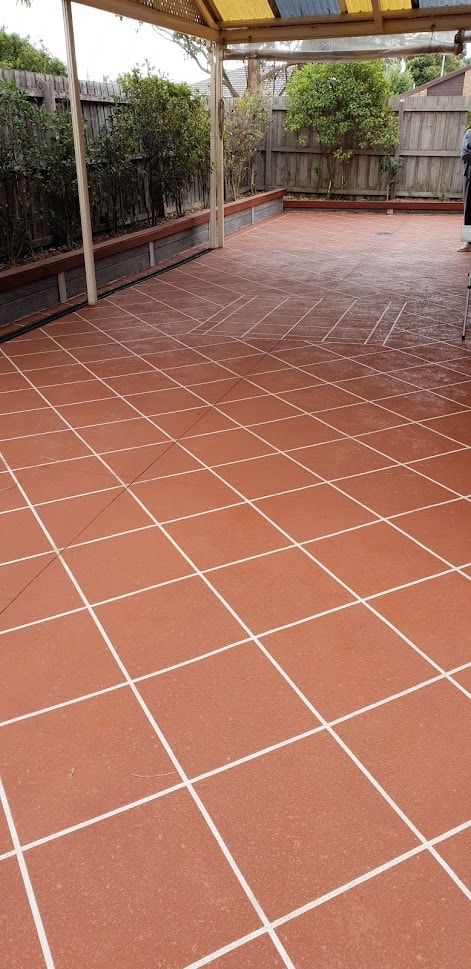
At Nupave, we see blushing sealer most often after concrete is sealed too early, sealed during high humidity, sealed late in the day before dew forms, or coated too heavily. In Melbourne, Gippsland, the Mornington Peninsula and similar Australian climates, cool nights and damp mornings can make all the difference. Nupave project feedback has shown that sealers applied before full concrete cure, commonly 28 days, or when ambient relative humidity is high, often above 70%, can show blush within 24–48 hours.
What Causes a Concrete Sealer to Turn White or Cloudy?
Moisture is the main reason a concrete sealer turns white or cloudy, but the moisture problem is usually created by timing, weather, surface preparation, product choice or application technique.
Trapped Moisture Under the Sealer
Trapped moisture forms when water vapour from the concrete slab, rain, cleaning, groundwater or humid air cannot escape before the sealer film closes over. Moisture trapped under sealers can cause white haze, and white haze often results from trapped moisture beneath sealers.
Concrete and other porous building materials behave differently from non-porous materials because water can move through pores. A concrete slab may look dry on the surface while deeper moisture is still moving upward. Hydrostatic pressure, vapour drive and osmosis can push moisture through porous materials; osmosis can cause pressures up to 3,000 psi in porous materials, which shows how powerful moisture movement can be in a porous material.
New concrete also needs time. Portland cement, water, sand and aggregate continue curing well after placement. For most Australian concrete surfaces, Nupave recommends waiting at least 28 days before sealing, unless a product manufacturer provides a specific alternative system. Sealing too early in a construction project can trap excess mix water under the coating.
High humidity makes the same problem worse. High humidity can trap water under wet finishes during drying processes, and blushing can be mitigated by avoiding application in high humidity environments. Fast-drying solvent-based finishes can cause blushing in high humidity because the surface layer dries before moisture has time to escape.
Environmental Application Conditions
Environmental conditions strongly affect how a sealer cures on concrete. Humidity and temperature affect how sealers cure on concrete, so the same product may perform well on one day and fail on another.
Applying sealer before morning dew evaporates is a common cause of milky concrete sealer. The surface can appear dry, but a thin moisture film may still be sitting in the pores. Sealing late in the afternoon can also be risky because falling temperature can bring the slab closer to dew point overnight.
Rain too soon after sealing can disrupt the coating before it has cured. If a concrete sealer gets wet before it dries, water can become trapped beneath the new layer, re-emulsify a water based sealer, or mark a solvent-based / acrylic sealer. Most exterior concrete sealing work should have a dry forecast for at least 24–48 hours after application.
Temperature swings also matter. Cold weather slows evaporation and cure. Hot concrete, direct sun or a hot driveway can make the surface skin over too quickly while the lower layer remains wet. Both conditions increase the risk of cloudy patches, a rough finish, adhesion failure and delamination.
Efflorescence can also appear during or after sealing. Efflorescence can occur within the first year of construction, and primary efflorescence occurs within the first 72 hours of construction. If salts are still moving through concrete, brick, mortar or masonry, sealing over them can trap the problem and create white patches beneath the coating.
Application Thickness and Technique Issues
Applying sealer too thick is one of the most preventable causes of blushing. Over-application of sealers can create cloudy patches on concrete, especially when a thick coat blocks moisture and solvent from escaping.
Acrylic sealers should be applied in thin coats of 1-2 mils. In practical terms, that means light coats, correct coverage rates and no pooling. Sealants with over 20% solids can lead to adhesion issues if they are applied too heavily or used in conditions that do not allow proper curing. High-solids coatings can create a durable finish, but they need careful application techniques.
Multiple coats can be useful, but only when they are compatible and applied correctly. If you apply multiple coats too quickly, the second coat can trap solvent or moisture in the first layer. If you place a water-based sealer over a solvent-based acrylic sealer, or a solvent-based sealer over an incompatible water based sealer, applying incompatible sealers can lead to white patches on concrete.
Poor surface preparation also contributes. Dust, sand, oils, curing compound residue, contamination, old coating, joint fines, calcium carbonate deposits, lime, salts or efflorescence can stop the sealer bonding. The wrong tools can make this worse by leaving puddles, missed areas or thick edges. A clean, dry, absorbent masonry surface gives a sealer the best chance of bonding and curing evenly.
Getting the sealer thickness right matters. Too thin and the finish can look patchy, uneven or under-protected. Too thick and the sealer can trap moisture, cure poorly, turn cloudy, or leave soft/tacky areas. The aim is not to flood the surface — it is to apply controlled, even coats that allow the sealer to cure properly and protect the concrete without creating problems later.
Blushing vs Efflorescence – What’s the Difference?
Blushing is a defect in the sealer film, while efflorescence is white mineral salt coming from the concrete or masonry surface.
This distinction matters because the fix is different. Blushing sealer is usually treated by softening, re-melting, stripping or resealing the sealer film. Efflorescence is treated by removing salts, correcting moisture movement and only sealing once the substrate is dry and stable.
Issue | Blushing / White Sealer Film | Efflorescence / Salt Bloom |
|---|---|---|
Location | In, under or directly within the sealer coating | On top of concrete, brick, mortar, joints or masonry |
Cause | Trapped moisture, humidity, over application, incompatible sealer or poor curing | Soluble salts moving through porous concrete or masonry with moisture |
Appearance | Smooth white haze, milky film, cloudy patches or greyish-white bloom | White mineral salts on masonry surfaces, often powdery or crystalline |
Touch test | Usually feels like part of the coating | Often rubs off as powder or crystals |
Common timing | Often appears within 24–48 hours after sealing | Can occur within the first year of construction |
Solution | Xylene re-melt for some solvent acrylics, stripping, or resealing | Dry brushing, mild vinegar solution, rinsing, drying, and moisture control |
Efflorescence appears as white mineral salts on masonry surfaces. The salts may include calcium carbonate from cement chemistry, or other soluble salts associated with concrete, portland cement, lime, mortar, brick, admixtures and groundwater. Calcium chloride can also be relevant where chloride-based accelerators or salts are present. Calcium stearate and other water repellents may be used in some masonry systems to reduce water absorption.
Efflorescence can indicate moisture issues in building materials. Primary efflorescence occurs within the first 72 hours of construction, while secondary efflorescence can occur later when ongoing rain, cracks, poor drainage, sprinklers, hydrostatic pressure or rising damp keep feeding moisture through porous building materials.
A simple diagnosis starts with touch and location. If the white material is powdery and can be removed by dry brushing, it is more likely efflorescence. Efflorescence can be removed by dry brushing and mild vinegar solution, followed by rinsing and full drying. Hot water may help dissolve some salts, but the surface must dry thoroughly before resealing.
If the mark is smooth, translucent, trapped under gloss, or changes when exposed to solvent, the issue is more likely blushing sealer. Do not seal over active efflorescence. Water repellents can help prevent efflorescence on concrete, but only after salt removal, moisture correction and proper drying. Otherwise, a new layer can lock salts beneath the coating and lead to another failure.
How to Fix a Sealer That Has Gone White or Cloudy
The correct fix for a sealer that has gone white or cloudy depends on the sealer type, the severity of whitening and whether the coating is still bonded to the concrete.
Before choosing a repair method, identify whether the coating is a solvent-based / acrylic sealer, a water-based sealer, polyurethane, penetrating sealer or an unknown older coating. Also check whether there is delamination, heavy over application, efflorescence under sealer, moisture coming through cracks, or surface contamination.
Xylene Re-Melt Method for Solvent-Based Acrylics
Xylene can often clear blushing in solvent-based acrylic sealers by softening the coating so trapped moisture and film irregularities can release and settle.
This method is most suitable for light to moderate blushing where the acrylic sealer is still well bonded. It is not a universal solution. Xylene does not reliably fix water-based sealer haze, deep moisture issues, badly peeling sealer, severe delamination or a slab affected by ongoing water pressure.
A typical xylene re-melt process is:
Confirm the sealer type. Use xylene only when the coating is compatible, usually solvent-based acrylic sealer.
Clean the surface. Remove dust, dirt, sand, oils, stains, loose salts and contamination.
Choose the right weather. Work on a cool, dry, overcast day with no rain expected. Avoid hot concrete, direct sun and high humidity.
Apply xylene carefully. Use a solvent-resistant roller or sprayer to wet the sealer enough to soften it without flooding the surface.
Work the surface. Back-roll or scrub with a suitable brush to help the softened coating relax and release trapped moisture.
Remove excess. Wipe, squeegee or manage excess solvent and softened sealer according to safety and disposal requirements.
Allow full drying. Let the coating dry completely, then inspect clarity, adhesion and slip resistance.
Recoat only if needed. If gloss has reduced but the film is sound, a thin compatible recoat may restore appearance.
Xylene is flammable and hazardous. Use outdoor ventilation, chemical-resistant gloves, eye protection, appropriate respiratory protection where required, and keep all flame, sparks and ignition sources away. Never use xylene casually in enclosed areas.
A lacquer retarder gives finishes more time to dry and helps moisture escape in some finishing systems, but concrete sealing products should only be adjusted with additives approved by the manufacturer. Do not add random solvents or retarders to a concrete sealer unless the technical data sheet allows it.
Expected results vary. Light blush can often clear well. Older solvent acrylic coatings may regain clarity but lose some gloss. If the coating has a rough finish, poor adhesion, deep whitening or active moisture below the slab, xylene may only provide temporary improvement.
Stripping and Resealing for Water-Based Sealers
Water-based sealer that has gone white usually needs stripping and resealing because the film cannot be re-melted in the same way as solvent acrylic.
A water based sealer forms a film as particles coalesce during drying. If humidity, rain, cold temperature or trapped moisture prevents proper film formation, the result can be milky, powdery or cloudy. Once that defect is locked into the coating, solvent washing may not fix it.
A typical stripping and resealing process is:
Identify the existing coating. Confirm whether it is water-based, solvent-based, polyurethane or an unknown sealer.
Select a compatible stripper. Use a chemical stripper designed for the coating type and site conditions.
Protect nearby areas. Manage runoff, plants, drains, pool water, walls and adjoining materials.
Strip the failed coating. Chemical stripping, pressure washing, mechanical abrasion or a combination may be required.
Remove residue. Rinse, neutralise if needed, and remove stripper residue, dust, salts and loose coating.
Let the concrete dry fully. Moisture testing should confirm the slab is suitable for resealing.
Reseal with the right product. Use a quality sealer suited to the exposure, surface type and Australian climate.
This process is also relevant when homeowners ask how to remove concrete sealer. Removal is not only about taking off the visible coating; the surface must be prepared so the next sealer can bond. Rushing straight to a new layer can repeat the same failure.
Choosing the replacement sealer matters. Penetrating sealers and water repellents can be useful where the aim is to repel water while allowing vapour to escape. Film-forming sealers can provide colour enhancement and a durable finish, but they carry a higher risk of trapping moisture if applied in the wrong conditions.

When Complete Removal is the Only Option
Complete removal is necessary when the sealer has lost adhesion, built up too thick, trapped salts, or failed beyond a cosmetic surface blush.
Signs that stripping is necessary include:
Delamination, flaking, peeling or lifting
Severe white haze through multiple coats
Thick, slippery or uneven coating build-up
Cloudy patches caused by over application
Efflorescence under sealer that keeps returning
Water ingress, rising damp, cracks or poor drainage
A rough finish or contaminated surface under the coating
Incompatible old products creating white patches on concrete
Nupave assesses the coating, concrete moisture, adhesion, surface profile and likely cause before recommending a fix. A small patio with a light blush may only need solvent re-melt. A large driveway with multiple coats, salts, delamination and moisture pressure may need full stripping, surface preparation and professional resealing.
A hairline crack does not need to look like the Grand Canyon to create moisture problems. Small cracks, low points, garden beds, sprinklers and shaded edges can all lead to repeated blushing if the moisture source is not corrected.
How to Stop It Happening Again
Blushing sealer is best prevented by allowing concrete to cure, checking moisture, choosing the right weather window and applying thin, even coats with a suitable product.
Proper Concrete Preparation and Curing
New concrete should usually cure for at least 28 days before sealing under typical Australian conditions. Cooler, wetter or shaded sites may need longer because cure time is not only about strength; it is also about reducing free moisture in the slab.
AS 3799 for curing compounds refers to retaining slab moisture during early cure, which highlights why moisture management is central to concrete performance. A slab should not be sealed simply because the surface looks dry.
Before sealing, check moisture. Useful methods include:
Plastic sheet test for 24–48 hours to check condensation or darkening
Moisture meter readings where appropriate
In-situ relative humidity probes for some internal concrete floors
Calcium chloride moisture testing where the system and site require it
Visual checks for damp edges, dark patches, cracks, rising damp or hydrostatic pressure
Surface cleaning is equally important. Remove old sealer, curing compound residue, dust, sand, oils, stains, efflorescence, lime deposits and contamination. The surface should be clean, dry and absorbent before the sealer is applied.
Although this article focuses on concrete, the wider principle applies across building materials: sealers create a protective barrier reducing wood expansion and contraction in timber applications, while concrete sealers protect porous concrete by limiting water, dirt and stain penetration. Different materials need different products, but moisture control remains the common requirement.
Choosing the Right Weather Window
The best sealing weather is dry, stable and mild, with low humidity and no rain forecast.
For many Australian exterior projects, a practical target is:
Ambient temperature around 15–30°C, subject to product instructions
Relative humidity below about 70%
No rain, sprinklers or wash-down for 24–48 hours
No morning dew on the slab
No late-day application if the temperature will drop sharply overnight
No direct application to very hot concrete
Blushing can be mitigated by avoiding application in high humidity environments. High humidity can trap water under wet finishes during drying processes, and fast-drying solvent-based finishes can cause blushing in high humidity because they close over too quickly.
The timing of the day can make all the difference. Late morning to early afternoon is often safer than early morning, because dew has evaporated and the slab has warmed. Late afternoon can be risky because the sealer may still be wet when air cools and moisture condenses.
Application Best Practices
Apply concrete sealer in thin, even coats rather than one heavy coat.
Acrylic sealers should be applied in thin coats of 1-2 mils. Follow the manufacturer’s coverage rate, back-roll sprayed sealer, avoid puddles, and do not let product collect in low spots, texture, stamp lines, saw cuts or exposed aggregate pockets.
If a second coat is required, apply it only after the first coat is ready according to the technical data sheet. Multiple coats should not mean thick coats. The safer method is to apply multiple coats as light coats, with correct timing and compatibility.
Use compatible products. Do not place a water-based sealer over a solvent-based acrylic sealer unless the surface has been correctly stripped and prepared. Do not assume that two clear sealers will work together. Applying incompatible sealers can lead to white patches on concrete.
Choose a quality sealer for the exposure. A shaded patio, pool surround or damp driveway may need a more breathable system than a fully exposed decorative slab. Water repellents can help prevent efflorescence on concrete by reducing water entry while allowing vapour movement, but film-forming sealers may be chosen where colour enhancement, gloss and stain protection are priorities.
Professional tools help, but correct judgement matters more than expensive gear. The wrong tools, poor roller choice, uneven spraying, no back-rolling, or sealing over moisture can ruin even a good product. Nupave uses site assessment, product compatibility checks and controlled application techniques to reduce the risk of blush, delamination and premature resealing.
Should You DIY or Call a Professional?
DIY repair may suit small, light blushing on a confirmed solvent-based acrylic sealer, but large, unknown, peeling or moisture-affected areas should be assessed by a professional.
The decision depends on area size, sealer type, safety risk, access, equipment, severity and whether the concrete has ongoing moisture issues. Xylene handling, chemical stripping, pressure washing and resealing all require care.