
Professional Concrete Grinding Melbourne
Concrete grinding is the process of mechanically abrading a hardened concrete slab with diamond-embedded discs to flatten it, remove coatings, and prepare the surface for whatever comes next — epoxy, sealing, resurfacing, or polishing.
At Nupave we grind concrete across Melbourne, the south-east suburbs, the Mornington Peninsula, Bass Coast and South Gippsland. Shaun answers the phone, checks every job in person, and matches the grinding method to what the slab actually needs — not a one-size-fits-all approach.
Whether it’s a garage floor with old paint to strip, a warehouse slab needing epoxy preparation, or a driveway with trip hazards and uneven joints, you get a written quote based on what we see, not a guess over the phone.
Request your written quote today.
What concrete grinding is used for
Concrete grinding is used to prepare or correct existing concrete slabs in residential and commercial spaces. The common applications are:
- Surface preparation before epoxy, sealing or decorative resurfacing
- Removing old coatings, paint, sealer, glue and adhesive
- Flattening trip hazards, uneven joints and high spots
- Creating the correct surface profile so a coating system can bond mechanically
- Exposing aggregate for a salt-and-pepper or fuller exposed-aggregate look (depending on depth)
- Cleaning up rough, weathered or contaminated concrete before any finish goes on
Across all of these, grinding is rarely the finished result on its own — it’s the step that determines whether the finish on top will hold.
Concrete grinding before epoxy flooring
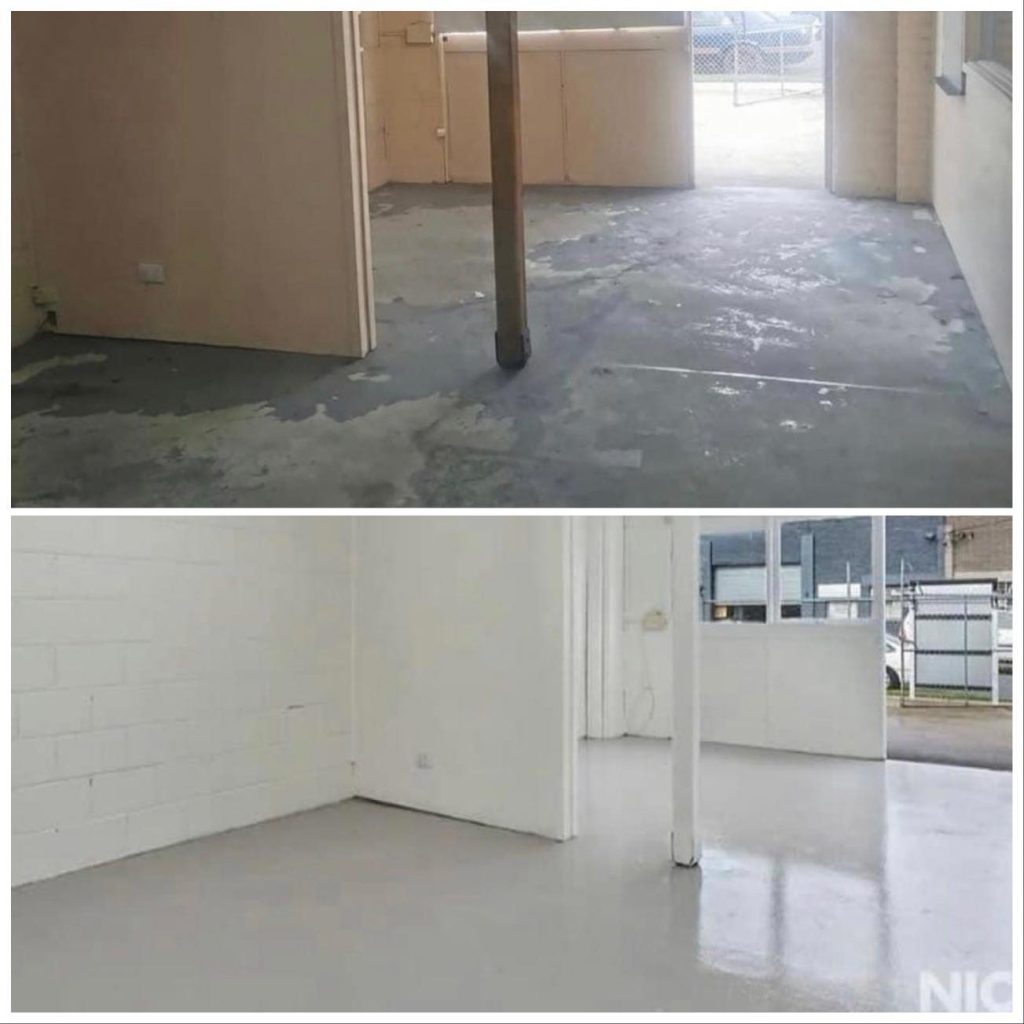
Diamond grinding is the first and most important step before installing an epoxy floor. The grinder opens up the top layer of the slab, creating the mechanical profile that lets epoxy lock into the concrete rather than sit on top of it.
Coating over smooth, sealed or contaminated concrete is the single most common reason epoxy fails. A power-trowelled slab can look perfectly clean and still have nothing for the epoxy to grip. Grinding solves that.
For most garage and commercial epoxy work we target a CSP-3 profile (roughly 75–100 micron) — that’s the surface roughness epoxy needs to bond reliably. Where a thicker coating system is going on, we’ll grind to a more aggressive profile.
Shaun checks the concrete condition before recommending epoxy — existing coatings, moisture, contamination, cracks, slab hardness. Not every slab suits epoxy, and grinding is the step where that becomes clear. If a slab has a problem, you’ll know before money is spent on a finish that won’t hold.
Concrete grinding before sealing or resurfacing
If you’re planning to seal or resurface a concrete slab, grinding is usually the preparation step that decides whether the finish lasts or fails.
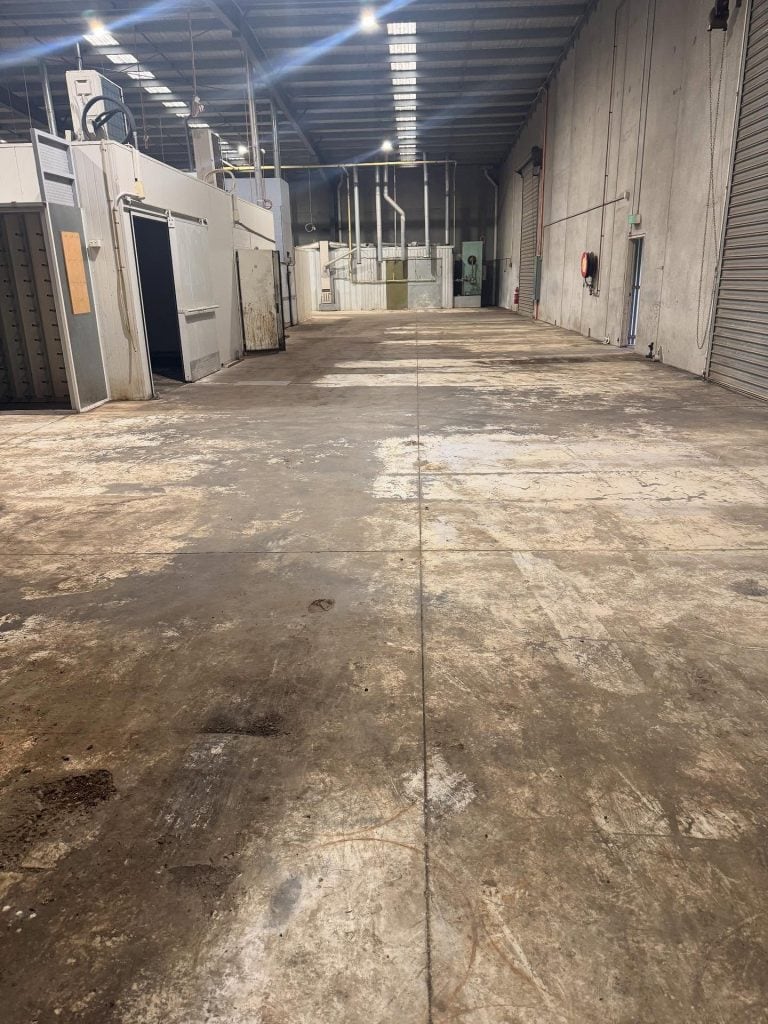
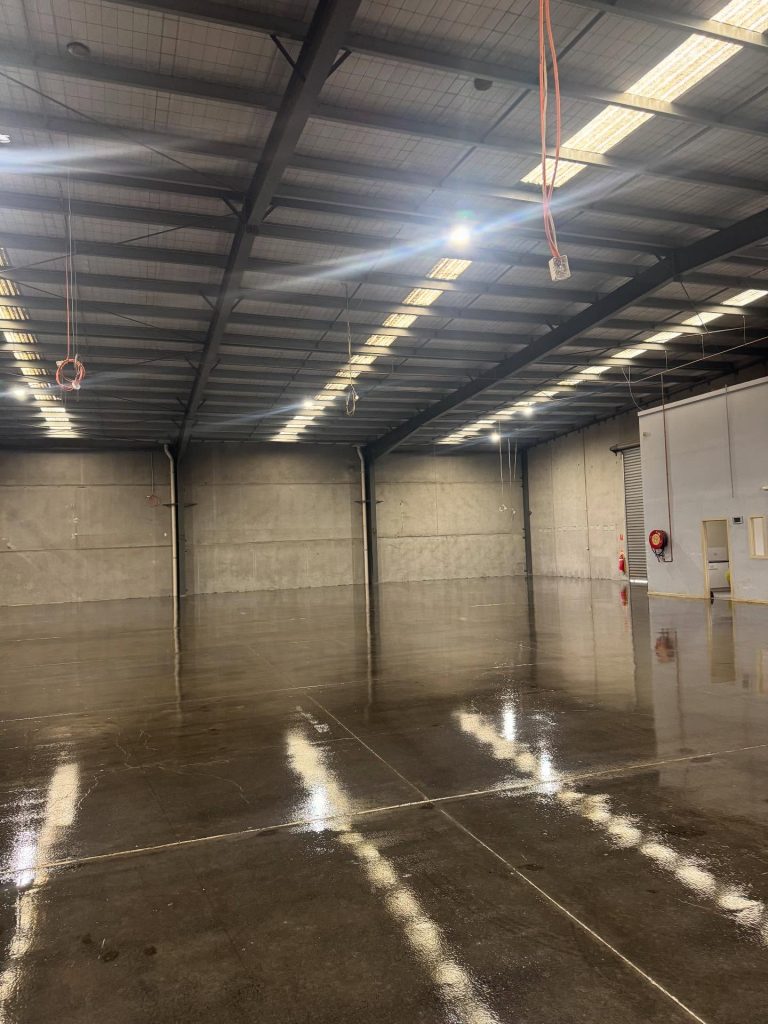
Grind and seal — a ‘grind and seal’ approach removes the existing top layer (old sealer, laitance, surface contamination), creates a clean profile, and lets the new sealer absorb into the concrete and bond properly. The finish depends on the slab condition, the grinding depth, and the sealer system chosen.
Resurfacing prep — decorative finishes like exposed aggregate resurfacing, stencil concrete, slate impression and cut stone need a properly profiled slab to mechanically bond to. Without the right grind, decorative overlays can delaminate under traffic or weather.
Too smooth and the resurfacing won’t grip. Too aggressive and you’ve removed more material than necessary. The grit progression and depth are matched to the finish going on top.
Grinding prepares the surface — it won’t compensate for a slab that’s structurally failing, severely cracked or actively moving. If the base slab isn’t sound, no amount of grinding will make a resurfacing system last. Some slabs need crack repair or patching first; we’ll tell you that before we start.
Removing old paint, sealer, glue and adhesive
Stripping old coatings is one of the most common reasons a slab needs grinding.
- Old paint and sealer — most surface paints and sealers come off with coarse-grit diamond segments (typically 16–30 grit for heavy removal). Depth and effort depend on the bond and how many layers are present.
- Carpet glue, tile adhesive, vinyl cement — common on commercial and residential floors being repurposed. Grinding strips these back to clean concrete. If adhesive has soaked deeper than 2–3 mm, multiple passes may be needed.
- Light oil staining — surface oil can often be improved or removed by grinding.
- Deep oil contamination — oil that has soaked into the concrete pores generally stays even after grinding, and it will interfere with epoxy or sealer adhesion. In those cases the contaminated layer may need chemical treatment or removal before any finish goes on.
Not every coating comes off cleanly. Some sealers penetrate deep into the pores. Some paints were applied over contamination and have locked stains in underneath. Shaun checks before quoting and gives you honest advice on what grinding can achieve — and where it can’t fully solve the issue.
Residential and commercial concrete grinding
Residential
- Garage floor grinding — old paint, sealer and tyre marks removed to prep for garage epoxy or sealing
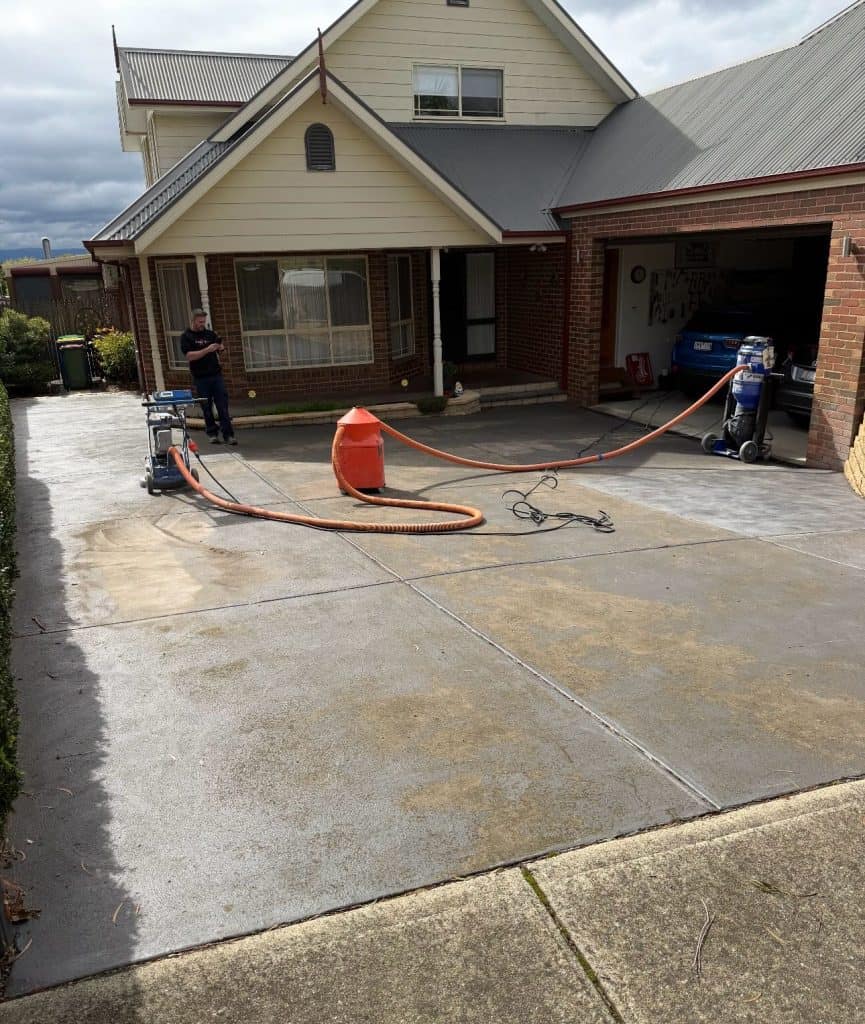
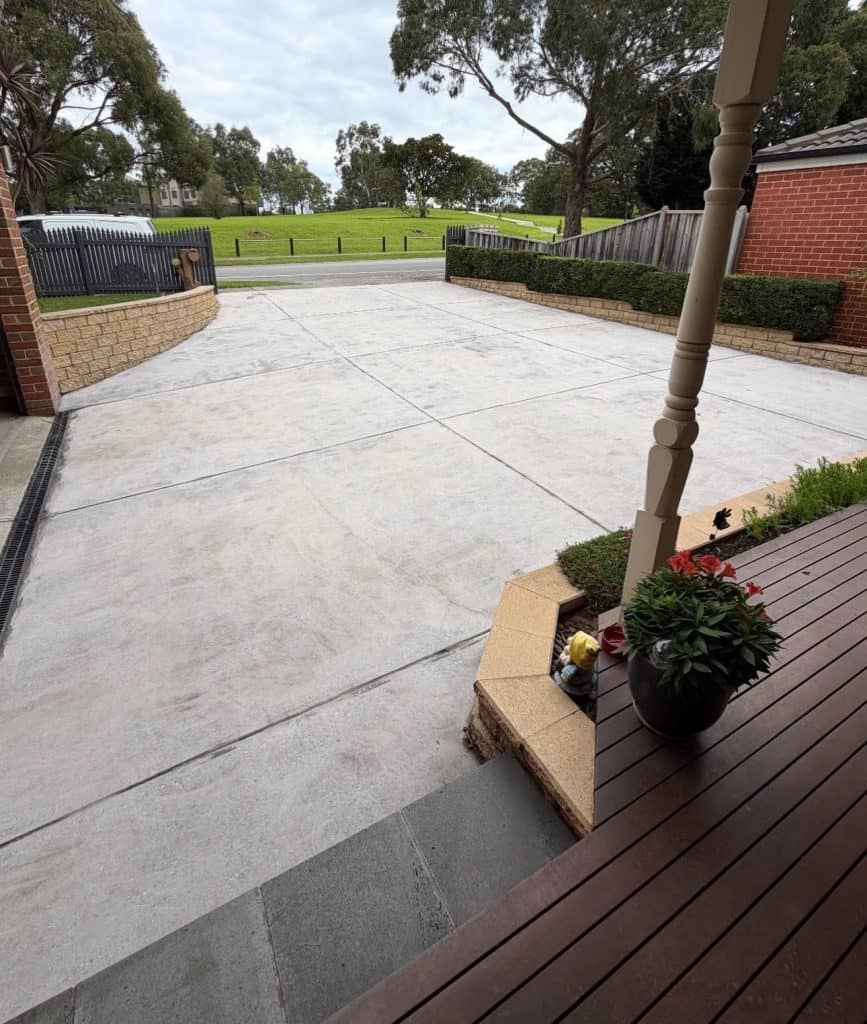
- Driveway and patio prep — flattening rough spots, removing failing sealer, creating texture before resurfacing or sealing
- Basement and workshop floors — adhesive residue, old tiles or uneven surfaces ground back to clean concrete
- Pool surround prep — removing old coatings and preparing for decorative resurfacing or sealing
Commercial
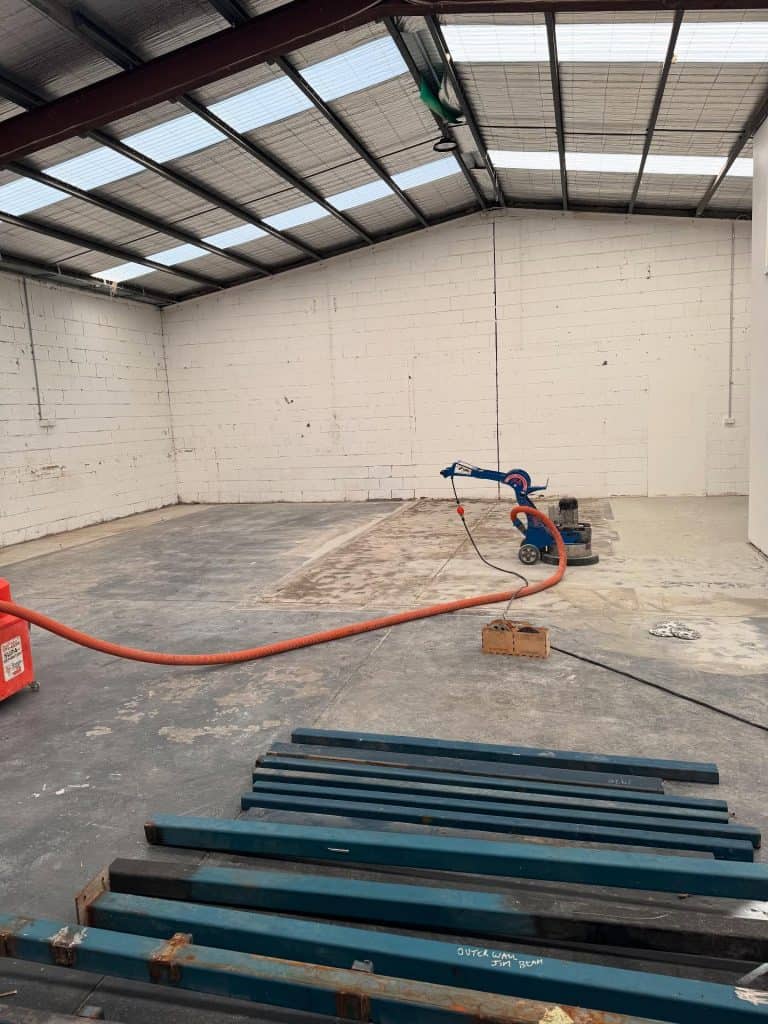
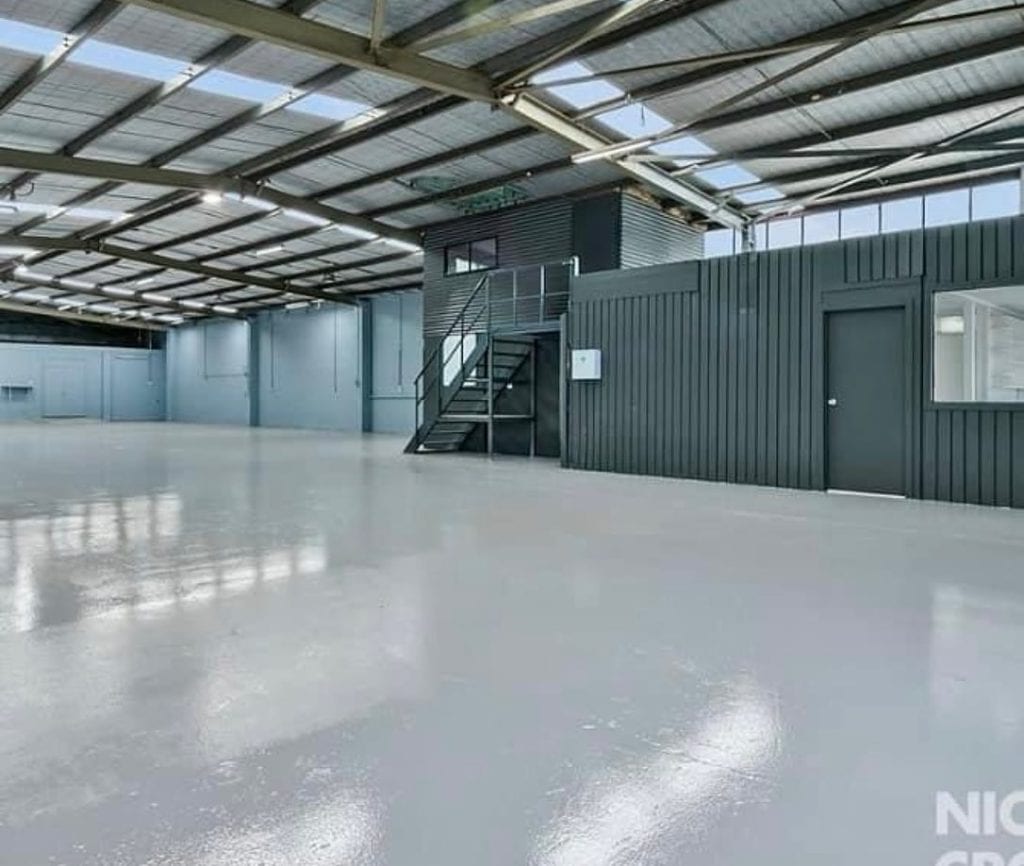
- Warehouse and factory floor preparation — large slabs use ride-on planetary grinders that cover hundreds of square metres per day
- Retail, office and hospitality — prep for epoxy or decorative finishes in high-traffic indoor spaces
- Body corporate, aged care, schools and public buildings — durable floor systems start with proper grinding so the coating doesn’t chip, peel or delaminate
Our concrete grinding process
Step 1 — On-site slab inspection
Every job starts with Shaun checking the concrete in person. That includes existing coatings, surface contamination, hardness, cracks, moisture, and structural condition. Adhesion of any existing coating is tested. The slab gets photographed and documented before anything is quoted.
Step 2 — Method and tooling selection
Not every slab gets ground the same way. We match the equipment and diamond tooling to:
- How much material needs removing
- Concrete hardness (hard bonds for soft concrete, soft bonds for hard concrete)
- The grit progression needed — coarse grits (16–30) for heavy removal, then stepping through to the grit that matches the finish
- Dust extraction setup — extractor capacity, shrouds and filtration matched to the equipment and the space
Step 3 — Diamond grinding with dust control
Grinding follows the planned grit sequence with overlapping passes at controlled speed to achieve uniform depth and profile. Each stage removes the scratch pattern from the previous one.
Dust control runs throughout. Concrete dust contains respirable crystalline silica, which causes serious long-term health issues. Australian WHS regulations require engineering controls — on-tool extraction shrouds and HEPA-filtered M-Class or H-Class vacuums — to keep silica exposure under the limit. PPE is the backup, not the primary control.
Step 4 — Post-grind assessment and next steps
After grinding, the slab is HEPA-vacuumed or washed and assessed. If a coating is going on, we test flatness (no more than ±3 mm over a 3-metre straightedge for most coating work) and adhesion (target ≥1.5 MPa pull-off strength). Any crack repair or patching is done before the finish goes on.
If grinding alone won’t solve the issue — moisture problem, deep contamination, structural damage — you’ll know before any finish is applied.
When concrete grinding is not enough
Concrete grinding is the right answer for a lot of slabs. But it’s not a fix for everything. We’d rather tell you that upfront than after you’ve paid for a finish that won’t hold.
- Structural cracks and slab movement. If the ground underneath has shifted, settled or moved, grinding the surface won’t stop the movement. The crack will come back through any finish. These slabs need structural assessment first.
- Deep concrete failure and spalling. Badly deteriorated concrete — deep spalling, delamination, exposed corroded reinforcement — can’t be restored by grinding. The surface might look better temporarily, but the underlying issue remains.
- Badly broken slabs. When damage runs deep, or the slab has lost structural integrity, the cost of grinding, patching and finishing can approach the cost of replacement. Sometimes a new pour is the more cost-effective option.
- Slabs that need repair before any finish. Many slabs need crack repair, joint filling or localised patching after grinding and before any coating goes on. Grinding often reveals the slab’s true condition — and that sometimes means extra work before the next step.
Shaun checks every slab and tells you honestly what grinding will and won’t fix.
Where we grind concrete
Nupave covers Melbourne, the south-east suburbs, the Mornington Peninsula, Bass Coast and South Gippsland. For larger commercial jobs we travel further on request.
Frequently Asked Question
Looking for answers about concrete grinding, resurfacing, sealing or epoxy flooring? Browse the frequently asked questions below or visit our Concrete Help Centre for more detailed guides and advice.
Is it called grinded concrete or ground concrete?
Most people say ‘grinded concrete’ — and we know what you mean. The correct term is ‘ground concrete’, and the process is ‘concrete grinding’. Whichever phrase you searched, you’re looking at the same thing: mechanically preparing or finishing a concrete surface with diamond tooling.
Do you have to grind concrete before epoxy?
Almost always, yes. Grinding gives the epoxy a clean, profiled surface to bond to. Coating over smooth, sealed or contaminated concrete is the single most common reason epoxy floors fail. The grinder opens the slab so the epoxy can mechanically interlock with the concrete rather than just sit on top.
Can grinding remove old paint, sealer or glue?
In most cases yes. Coarse-grit diamond segments handle paint, sealer, carpet glue and tile adhesive. How completely depends on how well the coating was bonded and how deep it has penetrated. Some deep-soaked penetrating sealers need multiple passes or more aggressive grinding.
Can grinding remove oil stains?
Can grinding remove oil stains?
Grinding will remove the top layer of concrete and can dramatically improve the appearance of light to moderate oil staining—especially when we pre‑treat the area with a commercial degreaser and let it dwell before grinding.
Heavy or long‑term oil contamination can soak deep into the concrete. In those cases, it often takes several cycles of degreasing, rinsing and grinding to purge most of the oil, and some staining may still remain. Any slab with significant oil history is inspected and test‑ground before we recommend an epoxy or sealer system, because coating directly over active oil can still cause adhesion problems and wasted money.
Can you seal ground concrete?
Yes — ‘grind and seal’ is a common, cost-effective way to protect and improve the appearance of a slab. The finish depends on the slab condition, how deep we grind, what aggregate gets exposed, and the sealer system. We talk through the finish you’re after before we start.
Can grinding fix uneven concrete?
It can reduce high spots, ridges, trowel marks and minor uneven areas — enough to remove trip hazards and create a flatter surface for the next step. It won’t fix major slab movement or structural problems. Some floors need repair, levelling or replacement, and Shaun will tell you if that’s the case.
Is concrete grinding dusty?
It can be, which is why dust control matters. We use on-tool extraction shrouds and HEPA-filtered M-Class or H-Class vacuums to keep silica dust under control — these are engineering controls that meet Australian WHS requirements. The exact setup depends on the slab, access and equipment.
How much does concrete grinding cost in Melbourne?
Grinding cost depends on slab size, coating thickness to remove, contamination, dust control requirements and what finish is going on top. We quote in writing after Shaun has inspected the slab in person — no guesses over the phone. If grinding alone won’t solve your problem, you’ll know before any work starts.